
A cargo charter requirement rarely arrives with time to spare. You know the origin, you have a rough idea of the destination, and someone is already asking when the aircraft can move. What you do not yet have is a clear enough picture of the route to brief a broker accurately.
That gap matters. A brief that is too vague produces quotes that do not reflect the actual operation. A broker who needs to go back and forth three times before they understand what you are asking for cannot give you their best answer quickly. And in cargo charter, quickly often counts.
Here is how to think through a cargo route before you make that first call.
Start with the aircraft type, not the aircraft name
Most cargo enquiries begin by asking which aircraft is available. A better starting point is asking which aircraft category fits the requirement.
The three main categories you are working within are freighter variants of narrowbody jets, wide-body freighters, and specialist cargo aircraft. The distinction that matters at the planning stage is payload capacity and range.
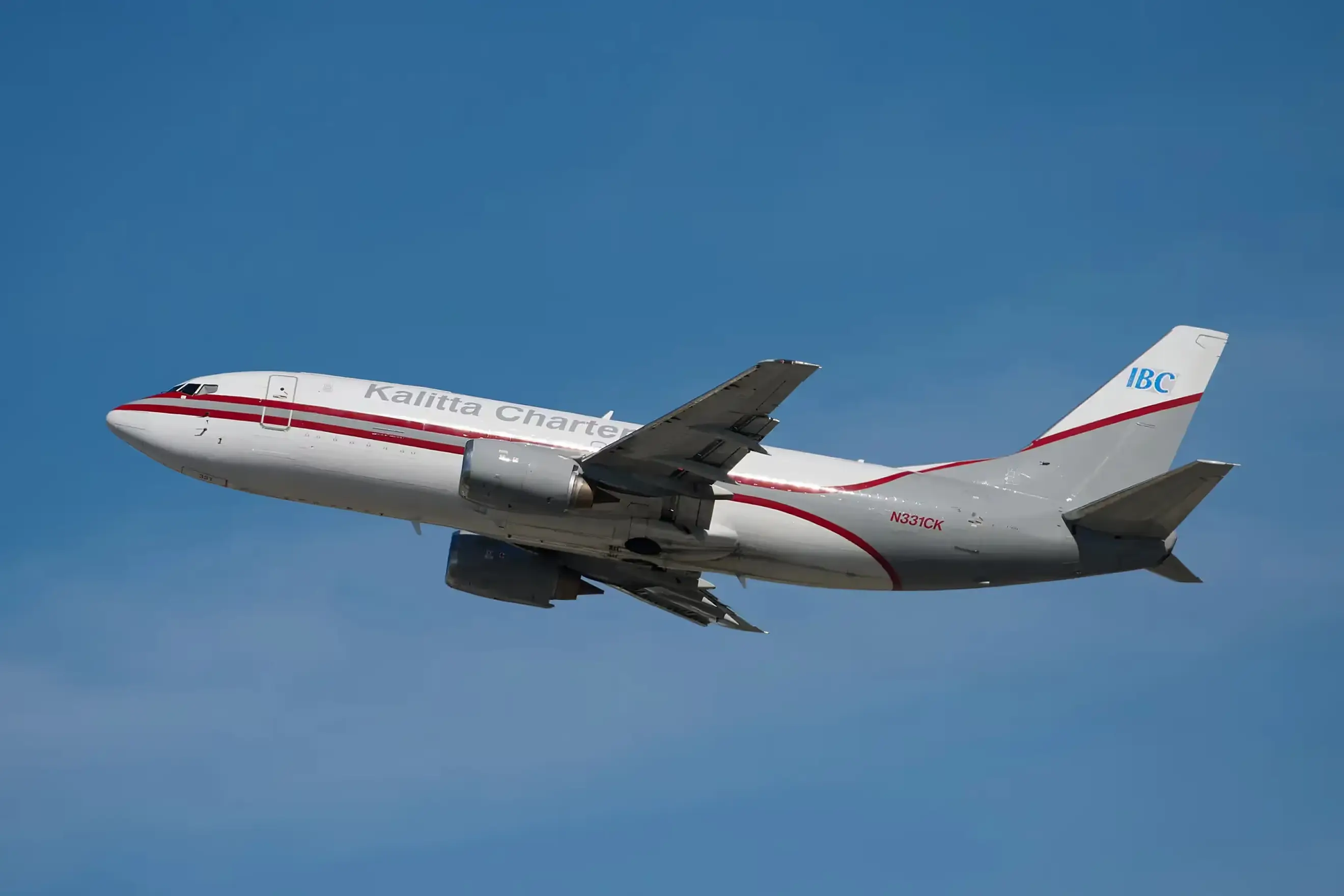
A narrowbody freighter such as a Boeing 737F can carry 20 to 25 tonnes over medium distances. A wide-body like a Boeing 747F moves 100 tonnes or more intercontinentally. Knowing roughly which category you need tells a broker more than a named preference does, and it keeps the quote process honest.
If you are moving time-critical parts or high-value cargo over a regional route, you are likely looking at a narrowbody or turboprop freighter. If you are moving a large volume across continents, you need a wide-body. That is the first question to answer before you call.
Understand the realistic range of the route
Charter aircraft do not always fly non-stop. Every aircraft type has a published maximum range, but that figure is affected by payload weight, wind, and routing. On longer sectors, a fully laden freighter will often require a fuel stop.
A useful rule of thumb for early-stage planning: if the great circle distance between your origin and destination exceeds 3,500 nautical miles and you are carrying a meaningful payload, assume at least one intermediate stop.
This is not a precise calculation. It is the kind of rough orientation that helps you arrive at the broker conversation already thinking about the full picture rather than just the endpoints.
Amsterdam to Almaty, for example, is roughly 2,700 nautical miles. Depending on the payload and aircraft type, that sector may or may not require an intermediate fuel stop. Istanbul, Tbilisi, and Baku are all viable waypoints along the central Asian corridor. You do not need to choose one before calling. But knowing that the question exists changes the quality of your brief.
Check for airspace and permit considerations
Not every route is straightforward from an airspace perspective. Certain territories require advance overflight permits that add 24 to 72 hours to the lead time on a routing. Others have restrictions that require aircraft to route around entire regions.
At the planning stage, you do not need a permit specialist. You need enough awareness to ask the right questions. If your route crosses Eastern European airspace, Central Asian corridors, or any territory with known permit complexity, flag it early. Ask the broker what the lead time looks like and whether any alternatives reduce that exposure.
This is also the point where airport selection becomes relevant. Some airports have cargo handling restrictions, curfews, or pavement weight limits that affect which aircraft can operate there. If you have flexibility on departure or destination airport, mention it. It can open options a broker might not otherwise raise.
Know your cargo basics before the conversation
A broker needs specific information to give you an accurate quote. The sooner you have this, the faster the process moves.
The core details to have ready before the call:
- Total weight in kilograms or tonnes
- Dimensions of the largest single piece (length, width, height)
- Any hazardous materials, including IATA DGR (Dangerous Goods Regulations) classification if applicable
- Temperature or special handling requirements
- Preferred departure window
- Any flexibility on date or departure airport
You do not need to present this as a formal document. A clear, direct message covering these points gives a broker what they need to come back with a quote that matches your actual requirement rather than a general estimate.
The question you are trying to answer before the call
All of this planning comes down to one question: is this movement operationally feasible within the parameters I have, and what does the realistic operation look like?
You do not need to answer that yourself. That is what a broker is for. But arriving at the conversation with a rough sense of the aircraft category, the likely routing, any airspace considerations, and your cargo basics means the broker can respond more accurately and more quickly.
That is the difference between an enquiry that turns into a workable quote and one that requires three rounds of clarification before anything moves.
If you want to work through the route visually before you make contact, FliteMapper lets you map the full journey, explore where fuel stops might fall, and download a route summary you can share internally or attach to an enquiry. It is a planning aid rather than a precision instrument, but it changes the quality of the conversation that follows.
Frequently asked questions
How far in advance do I need to plan a cargo charter?
The more lead time you have, the more aircraft options your broker can access. For international movements requiring overflight permits, two to five business days is a practical minimum. For domestic or short-notice movements, same-day and next-day solutions are sometimes possible depending on aircraft availability in the region.
Do I need to know the exact aircraft type before contacting a broker?
No. Knowing the broad category is useful context, but your broker will confirm the right aircraft for your payload and route. What matters more is having your cargo weight, dimensions, and departure parameters ready before the first conversation.
What is a fuel stop and how does it affect my cargo movement?
A fuel stop is an intermediate landing where the aircraft refuels before continuing to the final destination. It adds time to the transit and, in some cases, requires additional permits. Whether a fuel stop is needed depends on the aircraft type, payload weight, and the great circle distance of the route.
Can I charter a cargo aircraft for a partial load?
Yes. Part-charter options exist for smaller cargo volumes, though the cost per kilogram is higher than a full aircraft charter. Your broker can advise on whether a full charter, a part-charter arrangement, or an alternative freight solution is the better fit for what you are moving.
Get in touch with any questions about your air charter needs