Air cargo charter and scheduled freight are both viable options for moving goods by air. They are not interchangeable. Each serves a different set of requirements, and choosing the wrong one costs more than the transport rate alone would suggest.
The decision isn't simply about cost. It involves urgency, cargo type, destination access, schedule reliability, and the downstream consequences of delay. This guide covers the factors that determine which option is right for a given shipment, including the scenarios where the choice is clear and those where it requires more detailed analysis.
What Each Option Actually Provides
Understanding the structural difference between the two services makes the comparison more useful than a simple cost table.
Scheduled air freight operates on fixed routes with published departure times. You purchase space on an aircraft that will carry cargo from many other shippers on the same flight. Pricing is per kilogram or per unit volume. The network is extensive, with connections between major freight hubs covering most of the world. The trade-off is that your cargo shares priority with other shippers and is subject to the constraints of the network: consolidation delays, capacity allocation, potential bumping for higher-priority cargo, and hub connections that add transit time.
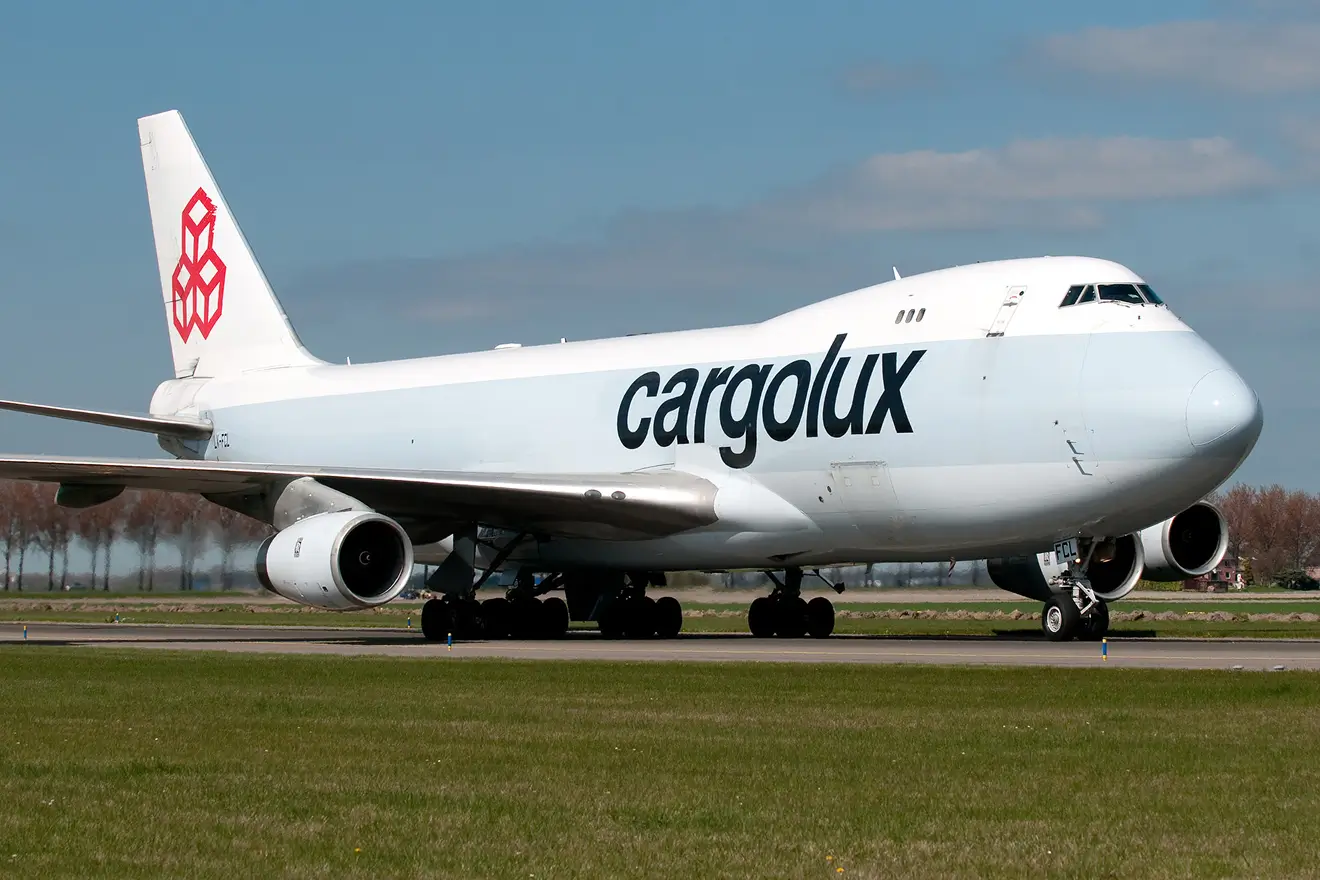
Air cargo charter provides an entire aircraft for your shipment, departing from an origin and time you specify to a destination you choose. There are no other shippers, no hub connections, and no network constraints. Pricing is per operation. The trade-off is cost: charter is significantly more expensive than scheduled freight on a cost-per-kilogram basis, and the financial case requires that this premium is justified by the operational value it delivers.
Our air cargo charter operations guide covers how the charter coordination process works in detail, from initial brief through to delivery confirmation.
When Scheduled Freight Is the Right Choice
Scheduled freight performs well when several conditions are true simultaneously:
- The cargo is not time-critical — delivery within a window of several days is acceptable
- The weight and dimensions fit standard unit load device (ULD) configurations
- The destination is served by regular scheduled service
- The cargo type is standard general freight without specialist handling requirements
- Cost per kilogram is the primary evaluation criterion
For high-volume, lower-value cargo moving regularly between well-connected freight hubs, scheduled freight delivers consistent, cost-effective service. Consolidators and freight forwarders provide access to multiple airline networks, giving shippers competitive rates and reasonable transit times for non-urgent movements.
The limitation appears when any of the above conditions stops being true. When cargo is urgent, when the destination isn't well-served by scheduled routes, when the cargo type requires specialist handling, or when delivery schedule reliability becomes critical, scheduled freight's network constraints start to create problems that cost more to resolve than the original rate saving.
When Charter Is the Clearer Choice
Several scenarios make the case for charter directly, without requiring detailed cost comparison:
AOG (Aircraft on Ground) situations. A grounded commercial aircraft generates losses of €60,000-€180,000 per day depending on type and route. No scheduled freight option can match the speed of a direct charter for a critical part. The cost differential between charter and scheduled freight is irrelevant against this downtime figure. For AOG operations, the question isn't whether to charter — it's how quickly the operation can be airborne.
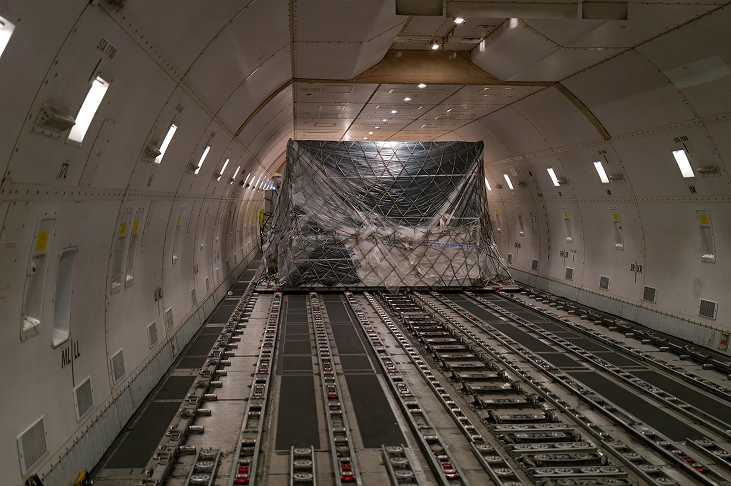
Cargo that exceeds scheduled network capacity. Oversized or very heavy cargo that doesn't fit in standard aircraft holds has no scheduled freight option. A mining excavator component, an industrial turbine, or a military vehicle needs a freighter with a nose door and a main deck clear of obstacles. Only charter provides this capability. Our large cargo aircraft guide covers the heavy-lift options available for outsized freight.
Destinations without scheduled service. Charter aircraft, particularly turboprops, can land at airstrips that scheduled freighters don't serve. Remote mining sites, secondary humanitarian destinations, offshore support bases, and conflict-affected regions all fall outside scheduled networks. If the destination isn't on a scheduled freight route, charter is the only viable air option.
Pharmaceutical and regulated cold chain. Temperature-controlled cargo moving under GDP (Good Distribution Practice) requirements needs documented, unbroken cold chain throughout transit. Scheduled networks involve handling at multiple airports, with dwell times in cargo terminals between connecting flights. Each handover point is a risk to temperature integrity. Charter provides a single, direct movement with controlled conditions throughout. Our GDP compliance checklist covers the documentation requirements for EU pharmaceutical operations.
Time-critical cargo where delay has a quantified cost. When the financial consequence of delay exceeds the charter premium, the decision is financial rather than operational. For manufacturing operations where a component stoppage costs €50,000 per hour, a charter costing €25,000 pays back in under 30 minutes of production restored.
The Middle Ground: When the Decision Requires Analysis
Several scenarios sit between the clear-cut cases and require more careful evaluation:
Semi-urgent cargo with a flexible window. If cargo needs to arrive within 48-72 hours and a scheduled service can achieve that, charter is harder to justify purely on urgency grounds. The analysis here involves reliability: what is the probability that the scheduled option actually delivers within the window, accounting for capacity constraints, weather, and network disruptions? During Q4 peak season or following a major disruption event, scheduled reliability drops and the probability-adjusted cost of scheduled freight rises.
High-value cargo where damage or loss has significant consequences. Dedicated charter reduces handling touchpoints and eliminates the consolidation and transfer process. For high-value electronics, art, or critical instruments, fewer handling events mean lower damage probability. The insurance value of reduced handling may justify a charter premium even without urgency.
Cargo moving on a route with limited scheduled frequency. If scheduled service to a destination runs three times a week and your window requires delivery before the next available departure, you face a choice between waiting and chartering. The cost comparison is between the charter premium and the cost of the wait, including downstream logistics disruption.
For an analysis of how urgent cargo workflows affect this decision across different cargo types, our post on urgent cargo workflow optimisation covers the decision frameworks logistics managers use.
Decision Framework: Charter vs Scheduled Freight
Use these questions to guide the decision for a specific shipment:
1. What is the cost of delay per day? If delay has a quantified cost that exceeds the charter premium, charter is justified on financial grounds alone. Calculate this first.
2. Does the cargo fit standard scheduled network constraints? Check weight, dimensions, and cargo type against standard ULD configurations and the network's handling capabilities. If it doesn't fit, the choice is already made.
3. Is the destination served by regular scheduled freight? If not, or if service frequency is insufficient for the required window, charter is the only viable option.
4. What is the schedule reliability of the scheduled option? A nominal transit time is only relevant if the scheduled service reliably achieves it. Check historical on-time performance for the specific route and period, particularly during peak seasons.
5. What specialist handling does the cargo require? Temperature control, dangerous goods certification, and oversized loading requirements constrain the scheduled options available and increase the relative value of charter's controlled environment.
6. What is the lead time? With seven or more days, both options are viable for most cargo. Under 72 hours, scheduled capacity on the required route may not be available and charter becomes the primary option regardless of preference.
Cost Comparison in Context
On a per-kilogram basis, scheduled freight is almost always cheaper than charter. The comparison looks different when evaluated against total logistics cost:
A shipment of pharmaceutical product valued at €500,000 moving on scheduled freight with a 72-hour transit and two hub connections carries a meaningful probability of temperature excursion, handling damage, or delay at each touchpoint. A direct charter at three times the freight rate eliminates these risks. The expected value comparison — accounting for probability of loss and its cost — often favours charter.
For a detailed breakdown of how charter pricing is structured, our post on cargo charter costs explained covers every component of a charter quote, including the positioning legs and handling charges that affect total cost.
Frequently Asked Questions
Is air cargo charter always faster than scheduled freight?
For direct, point-to-point routes, yes. Charter flies directly from origin to destination without hub connections or consolidation delays. For routes where scheduled freight already operates a direct service with good frequency, the transit time difference is smaller. The bigger advantage of charter is schedule certainty: the aircraft departs when you need it to, not when the network's capacity allows.
Can I use scheduled freight for dangerous goods?
Yes, most scheduled carriers accept dangerous goods classified under IATA DGR (Dangerous Goods Regulations), subject to quantity limits, packaging requirements, and documentation. Some categories are restricted or prohibited on passenger-carrying aircraft and can only move on all-cargo flights. For large quantities of dangerous goods, or for categories that fall outside scheduled network acceptance criteria, charter provides access to dedicated freighter capacity with appropriate certification.
What happens if my scheduled freight is bumped from the flight?
Scheduled cargo is sometimes offloaded when higher-priority cargo takes available space. This is more common during peak periods and on routes with high demand. The cargo typically moves on the next available flight, which may be hours or days later depending on frequency. For time-critical shipments, this risk is one of the main arguments for charter, where the aircraft is dedicated to your cargo and bumping isn't possible.
How do I know if my cargo qualifies for scheduled freight?
Scheduled carriers have acceptance criteria covering weight, dimensions, cargo type, packaging, and documentation. Standard general freight up to ULD weight and dimension limits is accepted by most carriers. Oversized, very heavy, live animals, certain dangerous goods categories, and some specialist cargo types may not be accepted. Your freight forwarder can confirm acceptance criteria for specific cargo and routes. If scheduled freight can't accommodate the cargo, charter provides the alternative.
When does it make financial sense to use charter for non-urgent cargo?
When the total cost of using scheduled freight — including the probability-weighted cost of delay, damage, or loss, plus any downstream logistics disruption — exceeds the charter premium. For high-value cargo on routes with poor scheduled reliability, or for cargo types with high damage probability in multi-handling networks, this calculation can favour charter even without urgency. The analysis requires an honest assessment of scheduled service quality on the specific route, not just the nominal transit time.
If you're evaluating charter versus scheduled freight for a specific shipment, speak to the Fliteline team. We'll give you an honest assessment of which option suits the requirement, including scenarios where scheduled freight is the better choice.
Get in touch with any questions about your air charter needs