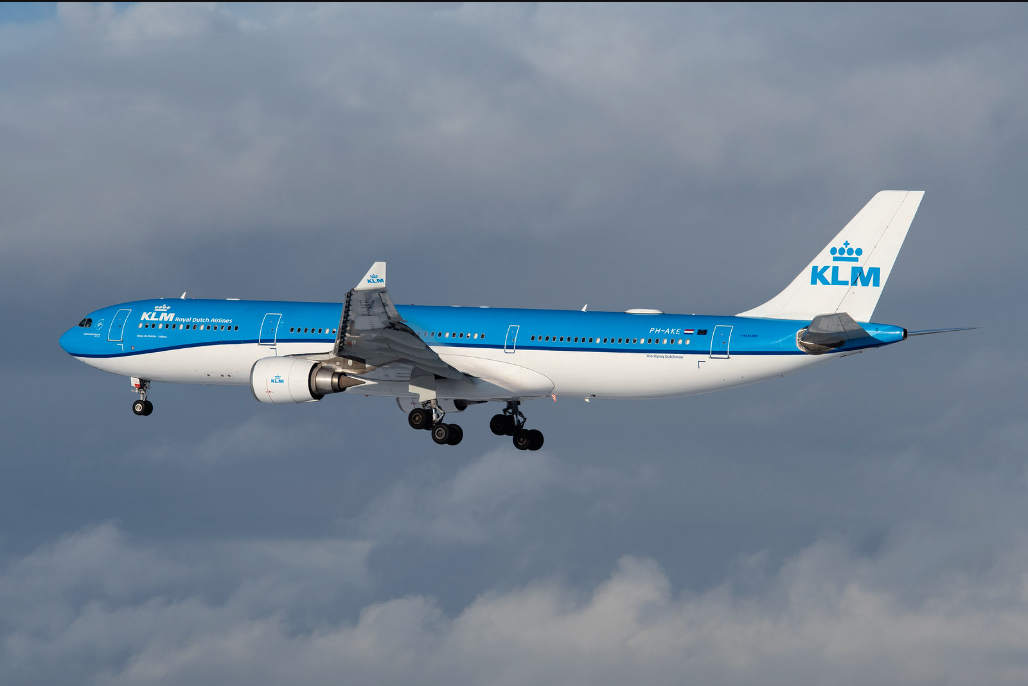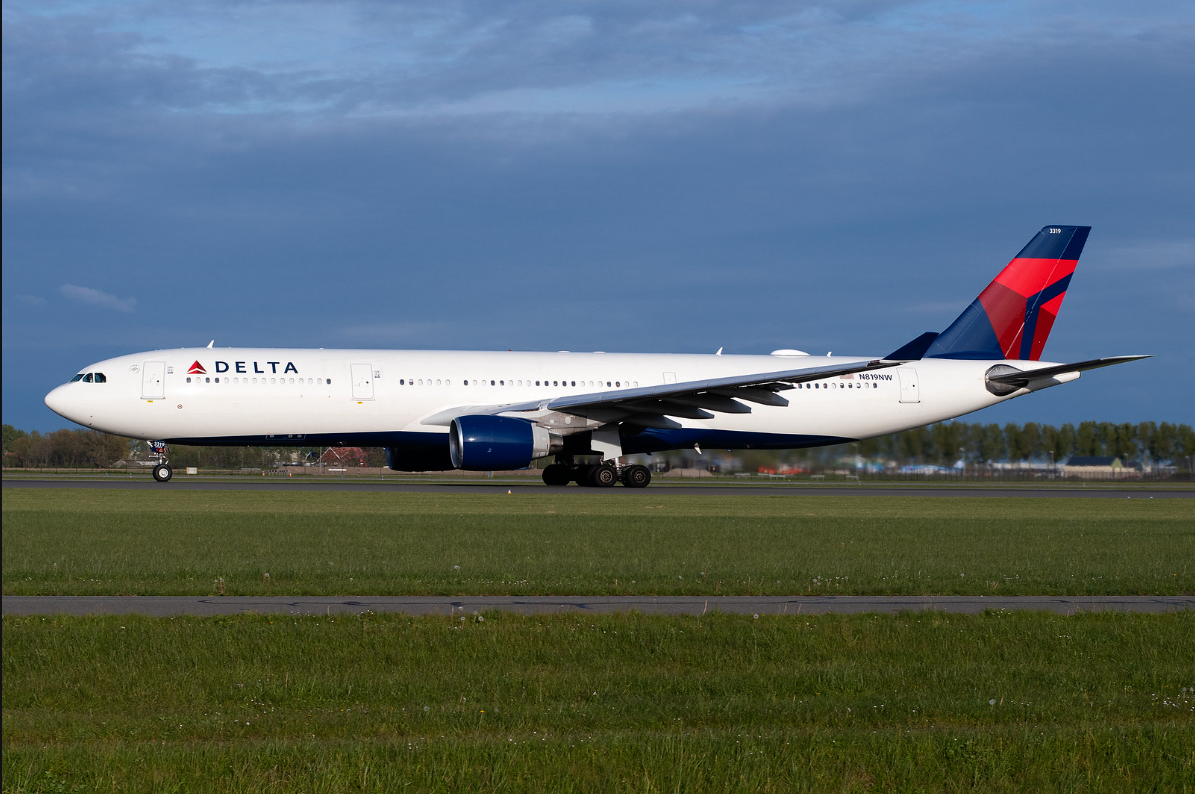
When a KLM A330-300 landed outside our Schiphol office this week, we already knew which engines it had. KLM flies the General Electric CF6-80E1. The more interesting question is why KLM chose it over the Rolls-Royce Trent 700 and the Pratt & Whitney PW4000.
Engine selection is one of the biggest decisions an airline makes when ordering a widebody. The engines make up a large share of the aircraft’s value and much of its long-term maintenance bill. The choice usually stays with the aircraft for its whole working life. The same three options applied to both the A330-200 and A330-300, so the reasoning below covers both models.
For the technical background, our article on the A330’s three engine options covers each engine in detail. This piece looks at the reasons behind the decisions.
Fleet commonality usually comes first
Airlines rarely choose an engine in isolation. They start with what is already in their hangars.
KLM is a textbook case. When it selected the CF6-80E1 for six A330-200s in April 2004, it already flew GE’s CF6-80C2 on its Boeing 747-400, 767-300ER and MD-11 fleets. When KLM later added the larger A330-300, it stayed with the same engine. The GE announcement at the time sets out that history.
An airline that stays with one engine family keeps the same tooling, the same spare parts and engineers who already know the hardware. That lowers cost. It also reduces the risk of an aircraft sitting on the ground waiting for a part.
Maintenance can become a business in its own right
KLM’s decision reached beyond its own fleet. As part of the deal, KLM Engineering & Maintenance became a CF6-80E1 overhaul centre of excellence and offered those services to other operators.
This turns an engine choice into a commercial opportunity. An airline with strong in-house engine shops can pick the engine that fits its maintenance business. It can then earn revenue by servicing other carriers’ engines.
Performance where conditions are hardest
For some airlines, the deciding factor is how the engine copes with the hottest, heaviest take-offs. Jet engines produce less thrust as air temperature rises. A fully loaded widebody leaving a Gulf airport in summer tests any engine.
This helps explain the Trent 700’s lead in the Middle East, where Rolls-Royce reports it powers more than 70 per cent of A330 operations. Airbus also raised the A330’s maximum take-off weight over the years, from around 212 tonnes to 242 tonnes. Engines with thrust in reserve could keep up with those heavier versions.
Proven long-range credentials
In the mid-1990s, many airlines were still building confidence in twin-engine aircraft on long overwater routes. ETOPS approval was a major selling point. It sets how far a twin may fly from a diversion airport.
Pratt & Whitney made the most of this. The PW4000-100 was the first engine to qualify for ETOPS before entering service. At the turn of the millennium, it powered more than half of the A330s flying. For airlines opening transatlantic or transpacific routes, that record counted.
Price, guarantees and support deals
Engine manufacturers compete hard for every order. Airlines negotiate on purchase price, fuel burn guarantees, reliability commitments and long-term service agreements. Those agreements fix the cost of maintenance per flight hour.
Over time, the market swung towards Rolls-Royce. According to the manufacturer, the Trent 700 won 90 per cent of A330 engine orders in the three years to 2018. Once one engine leads the installed base, spares and trained engineers become easier to find. Future buyers and lessees also become easier to attract, so the lead tends to grow.
Why the A330neo has only one engine
When Airbus launched the A330neo in 2014, it chose a single engine, the Rolls-Royce Trent 7000. Offering three engines would have raised development costs on a programme budgeted at roughly $2 billion. It would also have extended certification and complicated production.
That makes the neo simpler to build and support. The trade-off is that airlines lost the bargaining power that comes with having a choice.
What this means when you charter an A330
For charter clients, the engine rarely appears on a quote. It still shapes what an aircraft can do.
Two A330s of the same model with different engines, weights and cabin layouts can perform quite differently from the same airport on the same day. This matters most on hot-weather departures, long sectors and runways near the limit of the aircraft’s performance. Our guide to cargo charter route feasibility explains how range, payload and airspace interact.
When we source a widebody for passenger or group charter, an ACMI lease or a cargo movement, we work through these questions with the operator:
- Which engine and weight variant does this specific aircraft have?
- Can it carry the full passenger load or payload on this sector without a fuel stop?
- Where does the operator keep spare engines and parts, and how quickly can it recover from a technical issue away from base?
- Does the aircraft’s ETOPS approval suit the planned routing?
Clients do not need to know the answers themselves. They do need a broker who asks.
The right aircraft, down to the engines
Airlines spend months choosing an engine because the decision shapes an aircraft’s performance, costs and support for decades. We give the same attention to matching aircraft to missions, backed by more than 30 years in air charter.
If you have an upcoming requirement for a widebody aircraft, request a quote. Our team will talk you through the options.
Get in touch with any questions about your air charter needs