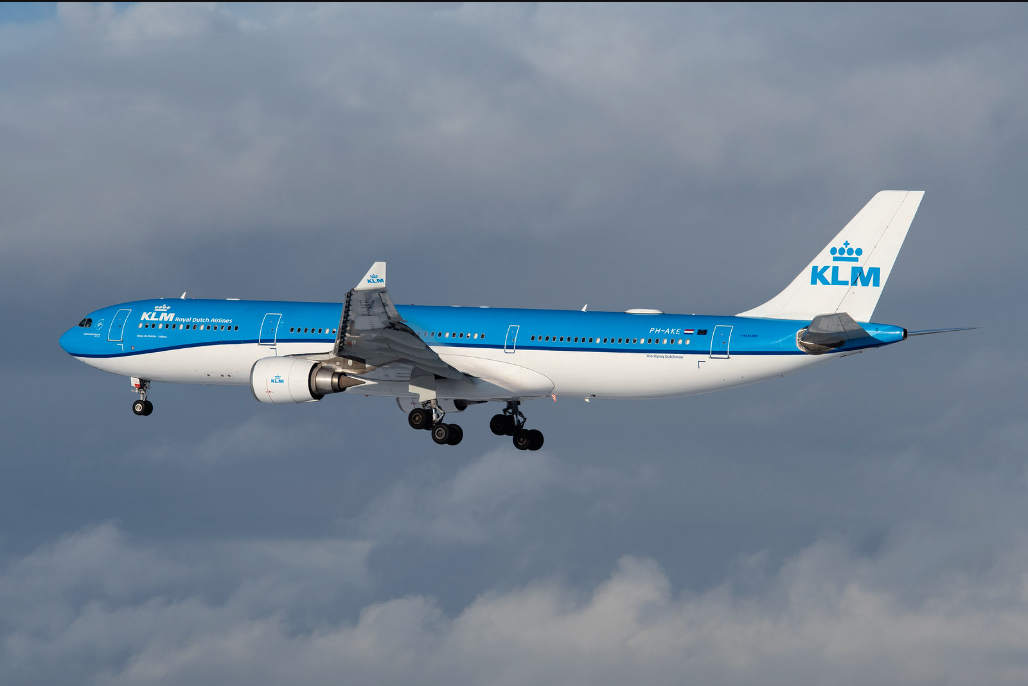
Earlier this week, a KLM Airbus A330-300 landed right in front of our office window at Schiphol. For a team of aviation enthusiasts, that was reason enough to put the kettle on and start a debate.
The question was which engines it was wearing, and why. The A330 is one of very few widebody aircraft that airlines could order with engines from three different manufacturers. Each option has its own history, and each says something about the airline that chose it.
This article looks at the three engines, what sets them apart and where you are most likely to see each one.
One airframe, three engine makers
The A330 was the first Airbus airliner to offer a choice of three engines. It entered service in 1994 as the A330-300, and the shorter, longer-range A330-200 followed in 1998. Airlines could choose from the same three engines on both models, so everything in this article applies to the A330-200 and A330-300 alike. The Airbus A330 family page shows the current line-up.
Airlines could specify the General Electric CF6-80E1, the Rolls-Royce Trent 700 or the Pratt & Whitney PW4000. All three produce roughly 64,500 to 72,000 pounds of take-off thrust. The real differences are in their design, their heritage and the support networks behind them.
That level of choice is rare today. The A330neo, which replaced the original A330, flies with one engine only, the Rolls-Royce Trent 7000.
General Electric CF6-80E1
The CF6 family has powered widebody aircraft since the early 1970s. For the A330, GE based the CF6-80E1 on the CF6-80C2 and gave it a new 96-inch fan. Full specifications are on GE Aerospace's CF6-80E1 datasheet.
Take-off thrust ranges from about 67,500 to 72,000 pounds. The engine shares a lot with the CF6-80C2, so it suited airlines already running that engine on the Boeing 747-400, 767 or MD-11.
The aircraft outside our window is a good example. KLM's A330-300s fly with the CF6-80E1A3, as listed in the Air France-KLM fleet overview. Its smaller A330-200s use the same engine, which keeps spares and engineering common across both fleets.
Rolls-Royce Trent 700
The Trent 700 was the first member of what became the Rolls-Royce Trent family. Cathay Pacific put it into service in March 1995, and it went on to become the most popular engine on the A330. The Rolls-Royce Trent 700 page covers its service record.
The Trent uses a three-shaft design. The fan, the intermediate compressor and the high-pressure compressor each turn on their own shaft, so each can run at the speed that suits it best. The Trent 700 has a 97.4-inch fan and delivers 68,000 to 72,000 pounds of thrust.
It is especially strong in the Middle East. Rolls-Royce reports that the Trent 700 powers more than 70 per cent of A330 operations in the region, where high temperatures and heavy take-off weights put the most strain on an engine.
Pratt & Whitney PW4000-100
Pratt & Whitney built a dedicated version of its PW4000 for the A330, with a 100-inch fan, the largest of the three. It entered service in 1994 and produces 64,500 to 68,600 pounds of thrust. The later Advantage70 upgrade raised that to 70,000 pounds. Details are on Pratt & Whitney's PW4000 100-inch page.
Its main distinction is ETOPS, the rules that set how far a twin-engine aircraft may fly from the nearest suitable airport. The PW4000-100 was the first engine to qualify for ETOPS before it entered service, and it now holds 180-minute approval.
Pratt & Whitney also supplied the complete propulsion package, including the nacelle and thrust reversers. At the turn of the millennium, the PW4000 powered more than half of the A330s in service.
One detail made us smile. Rolls-Royce and Pratt & Whitney both describe their engine as developed specifically for the A330. That tells you how hard the three manufacturers fought for this aircraft.
Where you will see each engine today
The three engines are not spread evenly around the world. Airline history, regional conditions and maintenance networks have all shaped where each one flies.
• General Electric CF6-80E1. Common with airlines that already had CF6 engines on older widebodies, KLM among them.
• Rolls-Royce Trent 700. The most widespread overall, with a particularly strong presence in Asia and the Middle East. Etihad Airways took its factory-new A330-300s with Trent 700s, and several of those aircraft now fly as freighters with Prime Air.
• Pratt & Whitney PW4000-100. Popular with early A330 customers. Etihad Airways' first ever flight was on a PW4000-powered A330-200, although that aircraft came second-hand from TAM rather than new from Airbus.
To identify the engines on a particular A330, whether a -200 or a -300, the registration is the most reliable guide. Most fleet databases list the engine type for each airframe. At KLM, the registration also tells you the model: PH-AK registrations belong to the A330-300s, and PH-AO registrations to the A330-200s.
Why this matters beyond the spotter's notebook
Engine choice is not only a talking point for enthusiasts. It affects how an aircraft performs on a hot day, how much it can lift from a given runway and how easily an operator can support it away from base.
That matters when we source widebody aircraft for clients. An A330 can be the right answer for a group charter moving a sports team or a large corporate delegation. It can also suit an airline covering a capacity gap through ACMI leasing. In both cases, we assess the individual aircraft, not just the type. Our passenger aircraft guide compares widebody types on capacity and range. The A330 also flies as a dedicated freighter, and our cargo aircraft guide shows where it fits.
Over to you
The A330 was not the only twin-engine widebody that airlines could order with engines from General Electric, Rolls-Royce and Pratt & Whitney. Can you name the others? Share your answer with us on LinkedIn or Facebook.
Here is a clue to get you started. The Boeing 747 offered the same three-way choice, but with four engines under its wings, it does not count.
Watching the skies from Schiphol
Being based at Schiphol means aircraft like this pass our window every day. We never tire of it. A moment like this is a reminder of how much thought goes into every aircraft an airline puts into service. If you have a requirement where the right widebody matters, request a quote. Our team will talk you through the options, engines included.
Get in touch with any questions about your air charter needs