Sustainable Air Cargo Charter: Reducing Emissions Without Compromising Operations
Air cargo charter is chosen because speed and reliability matter more than cost. That trade-off is well understood. What's less understood is that the environmental impact of a charter operation can vary significantly depending on how it's planned, and that reducing emissions doesn't require accepting slower or less reliable outcomes.
The practical levers available to logistics teams are mostly planning decisions. Aircraft selection, routing, load optimisation, and fuel choice all affect the carbon intensity of a charter operation before a single permit has been filed. Carbon offsetting has a role, but it works best as a complement to operational decisions rather than a substitute for them.
Why Charter Can Be More Efficient Than It Appears
The instinct when comparing air charter to scheduled freight on environmental grounds is to assume charter is worse. A dedicated aircraft carrying a part-load sounds less efficient than consolidated freight sharing capacity with many other shippers. That comparison is often correct in isolation, but it misses two factors that change the calculation.
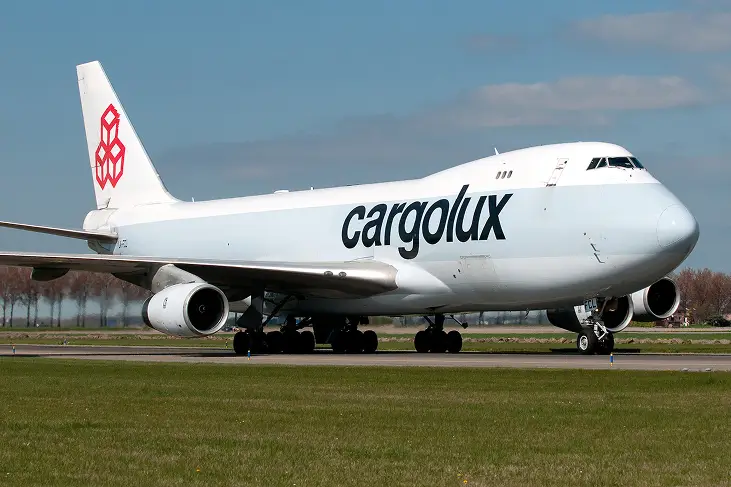
First, charter operations use direct routing. A freight shipment moving through a hub-and-spoke network may cover 40-60% more distance than a point-to-point charter on the same origin-destination pair. More flight time means more fuel burn. Second, charter allows precise aircraft selection for the cargo weight and dimensions. Using a Boeing 737F to move 10 tonnes on a 1,200 nm route burns considerably less fuel than a larger widebody carrying the same cargo alongside ballast. Scheduled networks don't offer this optimisation because capacity is sold in advance and load factors vary independently of your shipment.
Our air cargo charter operations guide covers aircraft selection in detail, including how matching aircraft to cargo profile reduces both cost and fuel consumption.
Sustainable Aviation Fuel and Cargo Charter
SAF (Sustainable Aviation Fuel) is the most discussed tool for reducing aviation emissions. It's a drop-in fuel that can be blended with conventional Jet A-1 up to a 50% blend without aircraft modification, and reduces lifecycle CO2 emissions by 50-80% depending on the feedstock and production method.
For cargo charter operations, SAF availability depends on the departure airport. Amsterdam Schiphol, Frankfurt, and several other major European cargo hubs have established SAF supply chains. Airports handling lower traffic volumes typically don't stock SAF routinely, though it can sometimes be arranged in advance.
The cost premium is real. In 2025, SAF costs approximately 4.2 times more than conventional Jet A-1. On a charter flight where fuel represents 30-50% of total cost, SAF at a partial blend adds a meaningful but manageable premium. Our detailed post on SAF costs and charter budgeting breaks down the numbers by aircraft type and route length, including which blend percentages are operationally achievable at different airports.
For corporate clients with Scope 3 emissions reporting obligations, using SAF provides documentation that carbon reduction actually occurred in the flight operation, rather than being offset elsewhere in the value chain. This distinction matters for sustainability reporting frameworks including GHG Protocol and science-based targets.
Route Optimisation as an Emissions Tool
Flight planning decisions affect fuel burn directly and are often overlooked in environmental planning. Three factors make the most material difference:
Direct routing versus technical stops. A direct flight is almost always more fuel-efficient than one with a technical stop, because take-off and climb phases burn significantly more fuel per kilometre than cruise. When a charter requires a technical stop for crew rest or range limitations, the additional fuel burn from two climb phases should factor into the environmental calculation.
Altitude and routing efficiency. Air traffic control constraints and weather routing can add 5-10% to a flight's fuel burn compared to the optimal great circle route. Charter operations coordinated by experienced brokers with established ATC relationships can achieve better slot times and more efficient routing than a first-time operator on the same city pair.
Departure timing. Flying during off-peak slot windows reduces the likelihood of holding patterns and vectoring on approach, both of which add unnecessary fuel burn. For shipments where a departure window of several hours is acceptable, optimising for slot efficiency reduces emissions without affecting delivery outcome.
Load Optimisation
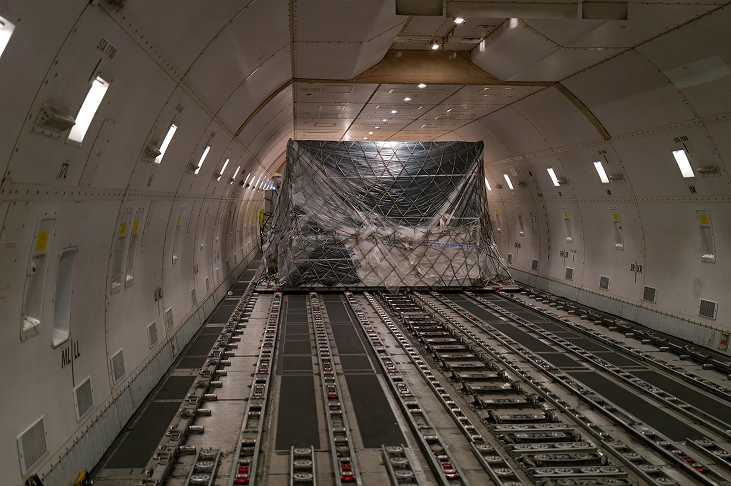
A charter aircraft carrying 60% of its payload capacity at full fuel load burns more per tonne of cargo delivered than one optimised for the actual load. When the cargo brief includes accurate weight, dimensions, and destination, we can match aircraft size more precisely to the requirement.
This isn't only a cost optimisation. Right-sizing the aircraft to the cargo reduces fuel burn proportionally. Moving 8 tonnes of manufacturing components on a Boeing 737F rather than an A330F on the same route delivers the same outcome with roughly half the fuel consumption.
Getting cargo specifications right at brief stage is one of the most impactful things a shipper can do. Our post on common cargo charter mistakes covers why inaccurate weight and dimension data causes problems beyond just aircraft selection.
Carbon Offsetting: Its Role and Its Limits
Carbon offset programmes allow shippers to compensate for emissions from a flight by funding verified carbon reduction projects elsewhere. Fliteline is a signatory to the UN Climate Neutral Now initiative, and we can facilitate offset arrangements for clients who need to report net-zero charter operations.
The limitation of offsets is that they don't reduce the emissions from the flight itself. They're an accounting mechanism, not an operational one. For clients with credible science-based targets, offsets work best as a bridge measure while operational reductions through SAF and route efficiency are developed, not as a primary strategy.
For a candid view of where SAF fits in aviation's overall decarbonisation picture, our post on SAF adoption realities for charter versus airlines covers the limitations as well as the opportunities.
Sustainability Reporting for Supply Chain Compliance
Corporate sustainability teams increasingly need emissions data from logistics providers as part of Scope 3 reporting. For air cargo charter, this means documentation covering:
- Fuel volume consumed on the specific flight
- SAF blend percentage and feedstock certification where applicable
- Calculated CO2 equivalent emissions using recognised methodology (ICAO or IATA)
- Any offset certificates associated with the flight
We provide post-flight emissions documentation on request. For clients with ongoing charter programmes, a quarterly summary covering all flights simplifies the reporting process for ESG teams.
The ReFuelEU Aviation regulation, which came into force across EU airports in 2025, mandates minimum SAF blends for all flights departing EU airports. This affects cargo charter operations departing Amsterdam Schiphol and other EU hubs, with the blend requirement increasing progressively through to 2050. Understanding how this affects your charter costs over a multi-year logistics programme is worth factoring into supplier conversations now.
Practical Checklist: Reducing Emissions on Your Next Charter
- Provide accurate cargo weight and dimensions so aircraft can be right-sized to the load
- Request SAF availability at departure airport and specify a blend percentage in your brief
- Ask your broker to optimise routing for direct service rather than hub connections
- Consider departure timing flexibility to access more efficient slot windows
- Request post-flight emissions documentation for Scope 3 reporting
- Use carbon offsets as a complement to operational decisions, not a substitute for them
You can explore the range of aircraft options for cargo operations, including fuel consumption characteristics by category, in our cargo aircraft guide.
Frequently Asked Questions
Is air cargo charter worse for the environment than scheduled freight?
Not necessarily. Charter allows direct routing and precise aircraft sizing, both of which reduce fuel burn compared to hub-and-spoke networks that may route cargo through two or three additional airports. The environmental comparison depends on specific routes, load factors, and aircraft types involved. A well-planned charter on a direct route with a right-sized aircraft can be more fuel-efficient per tonne than consolidated freight moving through multiple connections.
Can I use SAF on a cargo charter flight?
Yes, subject to availability at the departure airport. Major European cargo hubs including Amsterdam Schiphol and Frankfurt maintain SAF supply. Smaller airports may not stock SAF routinely but can sometimes arrange supply with sufficient advance notice. SAF can be blended with conventional Jet A-1 up to 50% without any aircraft modification. Costs are currently around 4.2 times those of conventional fuel, adding a meaningful but manageable premium.
How do I get emissions data for my cargo charter flight for Scope 3 reporting?
Request post-flight emissions documentation from your broker at the time of booking. A well-organised broker should be able to provide fuel consumption figures, calculated CO2 equivalent using ICAO methodology, SAF blend and certification details where applicable, and offset certificates if arranged. For ongoing programmes, a quarterly summary covering all flights makes reporting simpler.
What is ReFuelEU Aviation and does it affect cargo charter?
ReFuelEU Aviation is an EU regulation mandating minimum SAF blend percentages for all flights departing EU airports. It applies to cargo charter as well as passenger flights. The minimum blend started at 2% in 2025 and increases progressively. Flights departing from Amsterdam Schiphol and other EU cargo hubs are subject to this mandate, which affects fuel costs for EU-origin charters. The regulation is designed to scale SAF production by creating consistent demand.
Are carbon offsets credible for aviation emissions?
Carbon offsets from verified programmes (Gold Standard, VCS) are a recognised mechanism for compensating emissions that can't yet be eliminated operationally. For clients with science-based targets, offset quality matters significantly. High-quality offsets fund projects with measurable, additional, and permanent carbon reduction. They work best as a complement to operational improvements rather than as a standalone strategy, and many sustainability frameworks require disclosure of offset use separately from direct emissions reduction.
If you're planning a cargo charter and want to discuss emissions reduction options for your specific route and cargo type, speak to the Fliteline team.
Get in touch with any questions about your air charter needs