How a Football Team Charter Flight Is Organised
The UEFA qualifying rounds for the Champions League, Europa League and Conference League are under way. For the clubs involved, each draw creates a new away fixture. For the people responsible for the team’s travel, preparation usually starts before the opponent is known.
There can be only a few days between the draw and the match. A charter flight then depends on preparation, flexibility and close work between the club, its travel partner and its aviation specialists.
At Fliteline we work alongside the team’s travel agency or travel management company and take responsibility for the flying. While they manage hotels, ground transport and the travelling party, we make sure the aviation operation is ready from departure to arrival. Here is what that involves.
Before the draw: planning for several outcomes
In most competitions the possible opponents are known before the draw, so planning can start early. We research each potential destination in advance and build a picture of what the trip would look like:
- Which airports could accommodate the aircraft?
- Are there runway, slot or opening-hour restrictions?
- Is aircraft parking available?
- What handling is possible on the ground?
- How far is the airport from the hotel and the stadium?
When the draw is made, the groundwork is already done. Rather than starting from nothing, we move straight to confirming the route, airport and aircraft.
This matters most in the qualifying rounds. The gap between the draw, the confirmed fixture and the match can be very short. Once a team reaches the group stage there is usually more time, but the same early preparation still shortens every decision.
Choosing the airport
The nearest airport is not always the best airport.
Runway length, opening hours, slots, parking, handling, border control and the drive to the hotel or stadium all shape the decision. The aim is the best result for the whole journey, not only for the flight.
This is where experience counts. An airport that looks ideal on a map can prove to be the wrong choice once the detail is checked. That is one reason our sports team charter work starts with the ground picture, not the flight plan.
Choosing the aircraft
Alongside the airport, we look at aircraft availability against the team’s needs. Timings matter, but so does much else.
How many players and staff are travelling? Is extra legroom needed? How much kit and equipment is coming, and does the aircraft have the hold capacity for it? Can it operate from the chosen airport without restriction?
The aircraft has to suit the schedule, cabin, baggage and airport, not only the headcount. Once it is confirmed, detailed preparation begins.
Preparing the flight
At this point we take on the aviation side and work with the airline, both airports and every supplier involved. That covers:
- Aircraft handling at departure and arrival
- Passenger handling and boarding, including pre-printed boarding passes where possible
- Dedicated security or fast-track arrangements
- Baggage and team-kit handling
- Catering
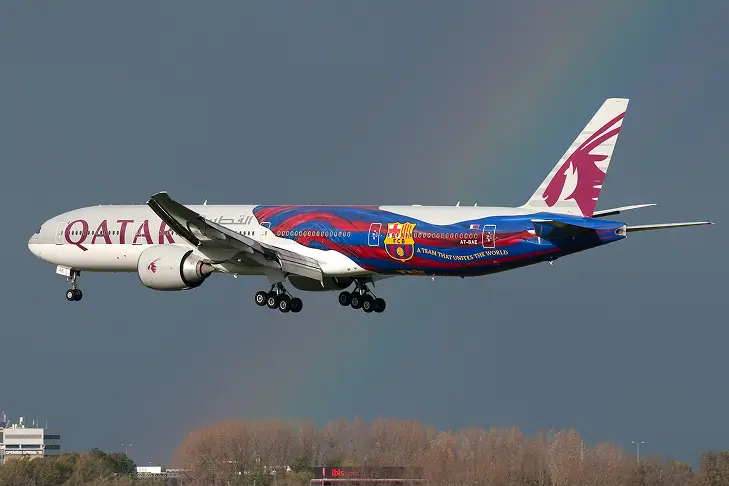
- Onboard branding
- Crew coordination
- Airport and ground-operation coordination
Time and privacy at the airport
For a professional squad, time and privacy matter. We work with the airport and handling agent to cut waiting and needless movement through the terminal. A dedicated security lane or fast track can often be arranged, so the team does not queue with scheduled passengers.
Where more privacy is needed, an FBO or private terminal may be an option. What is possible depends on the airport and on the team’s own needs.
The kit travels too
A football team does not travel light. Alongside players, staff and personal luggage there is kit and equipment to move.
We work with the handling company at both ends and arrange porters or extra baggage help where needed. Kit moves from the coach to the aircraft, and on arrival from the aircraft to the team’s onward transport.
Catering and the onboard experience
Catering is arranged to the team’s specification. We liaise with the caterer and the airline, confirm the service and check that the correct catering is actually loaded.
That last check matters when a flight sits close to a fixture. Meal timing and dietary needs are often part of the travel plan.
Staying in contact with the crew
Once airborne, we stay in touch with the crew and the team’s staff. That way the agreed service is delivered and any late request is handled.
Requirements change. A passenger may need assistance, or the club may ask for something late. Having one charter partner coordinating the flight means those things are resolved without drawing the team into them.
Arrival: from aircraft to hotel
Our role continues past landing. We can alert the arrival airport about the team’s coaches and brief the handling company, so the arrival is ready when the aircraft parks.
The objective is straightforward. The squad moves from aircraft to coach to hotel without waiting. Close cooperation with the travel partner is what makes that possible.
A team behind the team
A successful football charter is not simply a matter of putting a squad on an aircraft. It is a number of moving parts arriving at the right moment.
The club and its travel partner manage the trip and look after the players, staff, business club and sponsors. Fliteline handles the aviation: aircraft, airports, handling, security, baggage, catering, crew and the operational detail in between. Because planning starts before the draw, much of the work is complete before the opponent is known.
That preparation is worth most when a confirmed fixture has to become an operational charter flight within days. It is the kind of work our group and passenger charter team has been doing across European sports charter for three decades.
The team focuses on the match. Their travel partner focuses on the team. We focus on the flight.
If you are planning team travel for the coming season, request a quote and we will talk through the operation with you.
Frequently asked questions
How quickly can a charter flight for a football team be arranged? Within a few days when it needs to be. Short notice is normal in the qualifying rounds. It works because the airport and aircraft research is usually done before the draw, not after it.
Who is responsible for what between the club, the travel partner and the broker? The club and its travel partner manage the trip, including hotels, ground transport and the travelling party. Fliteline takes the aviation side: aircraft, both airports, handling, security, baggage, catering and crew coordination.
Can a squad avoid the main terminal? Often, yes. A dedicated security lane or fast track can usually be arranged. Where more privacy is needed, an FBO or private terminal may be possible, depending on the airport.
How is team kit and equipment handled? We work with the handling company at both airports and arrange porters or extra baggage help where needed. Kit moves straight between the coach and the aircraft hold.
Get in touch with any questions about your air charter needs