Understanding Football Equipment Charter Logistics
Professional football operations require more than transporting players to away fixtures. Equipment logistics determine whether teams arrive match-ready or spend crucial pre-match hours resolving missing kit, inaccessible medical supplies, or damaged gear that undermines performance before kickoff.
Commercial aviation handles individual passenger baggage adequately. The system breaks down when coordinating 25-30 bags of playing kit, medical equipment including physiotherapy tables, technical gear for video analysis, and operational items like water coolers across connections where baggage systems separate items across multiple carousel arrivals.
Charter coordination eliminates these failure points through dedicated cargo holds where all equipment travels together, loads under team supervision, and arrives as a complete manifest ready for immediate venue transport. This reliability matters most for midweek fixtures, tournament participation, or any situation where equipment logistics cannot compromise match readiness.
Equipment Categories and Coordination Requirements
Systematic equipment coordination begins with understanding distinct categories that require different handling approaches during loading, transport, and arrival processes.
Playing Kit and Performance Equipment
Playing kit represents the most visible equipment category, organised in standardised wheeled crates and cases enabling systematic loading and identification.
Match kit storage typically uses wheeled crates measuring 75cm wide × 60cm deep × 40cm high (labeled T1, T5), containing player clothing including shirts, sweaters, pants, and thermal wear for match conditions. Goalkeeper kits with specialised thermal clothing travel in dedicated crates (T5) ensuring complete specialist equipment remains together. Teams commonly use T-number labelling systems (T1-T5) enabling ground crews to identify specific crate contents without opening containers during loading sequences.
Spare warm-up clothing travels in separate T2 crates (75cm × 60cm × 40cm) maintaining backup options for unpredictable weather or equipment damage. This separation from primary match kit provides redundancy—if one crate delays, teams retain either match kit or warm-up clothing rather than losing complete clothing inventory through single-point failure.
Staff match-day clothing including tracksuits for coaching staff and bench personnel typically occupies dedicated T4 crates (75cm × 60cm × 40cm dimensions), ensuring professional appearance throughout fixture whilst separating staff items from player equipment during venue distribution.
The primary coordination requirement involves ensuring complete kit sets travel together whilst maintaining some distribution across multiple crates. Separating all goalkeeper equipment, all home kit, or all warm-up clothing into isolated containers creates vulnerability if individual crates delay.
Medical and Physiotherapy Equipment
Medical equipment creates the most significant coordination challenges due to dimensions exceeding standard baggage sizes and absolute necessity for match participation under league safety regulations.
Medical cases containing emergency supplies, strapping materials, bandages, ice packs, and prescribed medications typically measure 58cm long × 51cm wide × 90cm high. Professional operations commonly transport two medical cases providing redundancy for critical supplies—if one case delays, teams retain partial medical capability rather than complete equipment loss. League regulations often mandate minimum medical supplies for match participation, making these cases amongst essential equipment that cannot travel separately from squad.
Specialised medical storage in larger blue medical crates (90cm high × 50cm wide × 60cm deep) accommodates bulkier physiotherapy equipment, additional emergency supplies, and specialised treatment items. These crates exceed standard baggage dimensions, requiring assessment against aircraft baggage door openings (typically 80-100cm wide) during charter planning.
Physiotherapy treatment tables represent the largest single equipment item most teams transport. Folding tables designed for portability typically measure 2 metres long and fold to approximately 1 metre length with 15-20cm thickness. These dimensions may challenge baggage hold height restrictions in some regional aircraft, occasionally requiring cabin storage arrangements or selection of aircraft with greater baggage compartment clearance.
Medical equipment coordination requires identifying items critical for match participation (medical cases, emergency supplies) versus items that enhance but don't determine participation. This distinction guides decisions when baggage space limitations require prioritisation.
Technical and Communication Equipment
Modern football operations depend on video analysis and communication systems that travel in protective cases with dimensions requiring careful manifest planning.
Video analysis equipment including cameras, tripods, cables, and recording reels travels in dedicated T3 crates (75cm × 60cm × 40cm) with protective cushioning preventing damage during transport. These technical equipment crates require positioning away from heavier items that could shift during flight and impact fragile electronics through compression.
Small equipment cases (78cm long × 58cm wide × 51cm high) typically accommodate portable video projection equipment, tablets preloaded with match footage and opposition analysis, and coach communication devices. Professional operations commonly transport four small cases distributing technical equipment and operational supplies across multiple containers reducing single-point failure risk.
Communication systems covering coach-to-bench devices, player tracking equipment, and GPS systems for performance analysis pack within small cases. Some electronic equipment requires careful battery management under aviation safety regulations—teams should verify battery types comply with air transport restrictions, particularly lithium batteries in cameras and tablets.
Technical equipment coordination focuses on protective positioning within baggage holds and clear identification enabling ground crews to handle fragile cases appropriately during loading and unloading sequences.
Nutrition and Hydration Equipment
Match-day nutrition and hydration logistics require specialised equipment ensuring players maintain performance energy throughout fixtures.
Nutrition cases (78cm × 58cm × 93cm) transport match-day nutrition supplies including energy gels, recovery drinks, pre-match meals, and specialised dietary items for individual player requirements. Teams typically transport two nutrition cases providing redundancy for critical nutritional support—maintaining performance nutrition proves essential for match readiness even if other equipment challenges occur.
Hydration equipment creates transport volume through cases and coolers. Empty coolers transport efficiently but teams must coordinate filling at destination facilities. Some operations prefer transporting pre-filled hydration systems accepting volume trade-off for eliminating destination coordination requirements and ensuring familiar hydration setups.
Our sports team charter services coordinate with destination ground staff to prepare hydration equipment when teams prefer avoiding transport of filled coolers, eliminating volume whilst ensuring match-day readiness.
Gym and Training Equipment
Physical preparation equipment supports player warm-up routines and pre-match preparation protocols.
Gym equipment cases (78cm × 58cm × 51cm) contain resistance bands, recovery tools, portable massage equipment, and individual warm-up apparatus players require for pre-match preparation. Single gym cases accommodate most warm-up equipment, though teams with extensive physiotherapy programs may transport additional specialised recovery items.
Training balls travel in dedicated bags holding 10-15 balls for pre-match warm-up and potential training sessions. Ball bags typically measure 70-80cm diameter, fitting through standard baggage doors but requiring secure positioning preventing rolling during loading.
Training markers and cones for warm-up organisation compress into small bags creating minimal transport challenges. Most teams carry lightweight portable sets rather than full training ground equipment for away fixtures.
Large Equipment Cases and Contingency Supplies
Backup equipment and operational supplies pack within standardised large cases providing flexible storage across multiple containers.
Large equipment cases (78cm long × 58cm wide × 71cm high) provide flexible storage for backup kit, spare boots, replacement equipment, and operational supplies. Professional operations commonly transport six large cases distributing contingency equipment across multiple containers—if individual cases delay, teams retain partial backup capabilities rather than complete contingency equipment loss.
Case standardisation at 78cm length enables efficient baggage hold positioning. Multiple cases sharing identical 78cm × 58cm footprint dimensions stack systematically, maximising baggage volume utilisation whilst simplifying ground crew loading sequences.
Operational supplies including pitch marking tape, spare water bottles, basic tool kits, and emergency repair equipment pack within large cases. These supplies rarely determine match readiness but prevent minor issues from becoming major disruptions requiring venue facility coordination.
Backup and emergency equipment distributed across large cases includes spare kits for colour clashes, replacement boots for unexpected breakage, and additional medical supplies beyond primary cases. League regulations often specify minimum backup equipment requirements for competition participation.
Equipment Loading and Aircraft Coordination
Effective equipment coordination requires understanding the practical realities of transporting gear on passenger charter aircraft and working with charter coordinators to match equipment requirements with suitable aircraft.
Understanding Passenger Aircraft Baggage Capacity
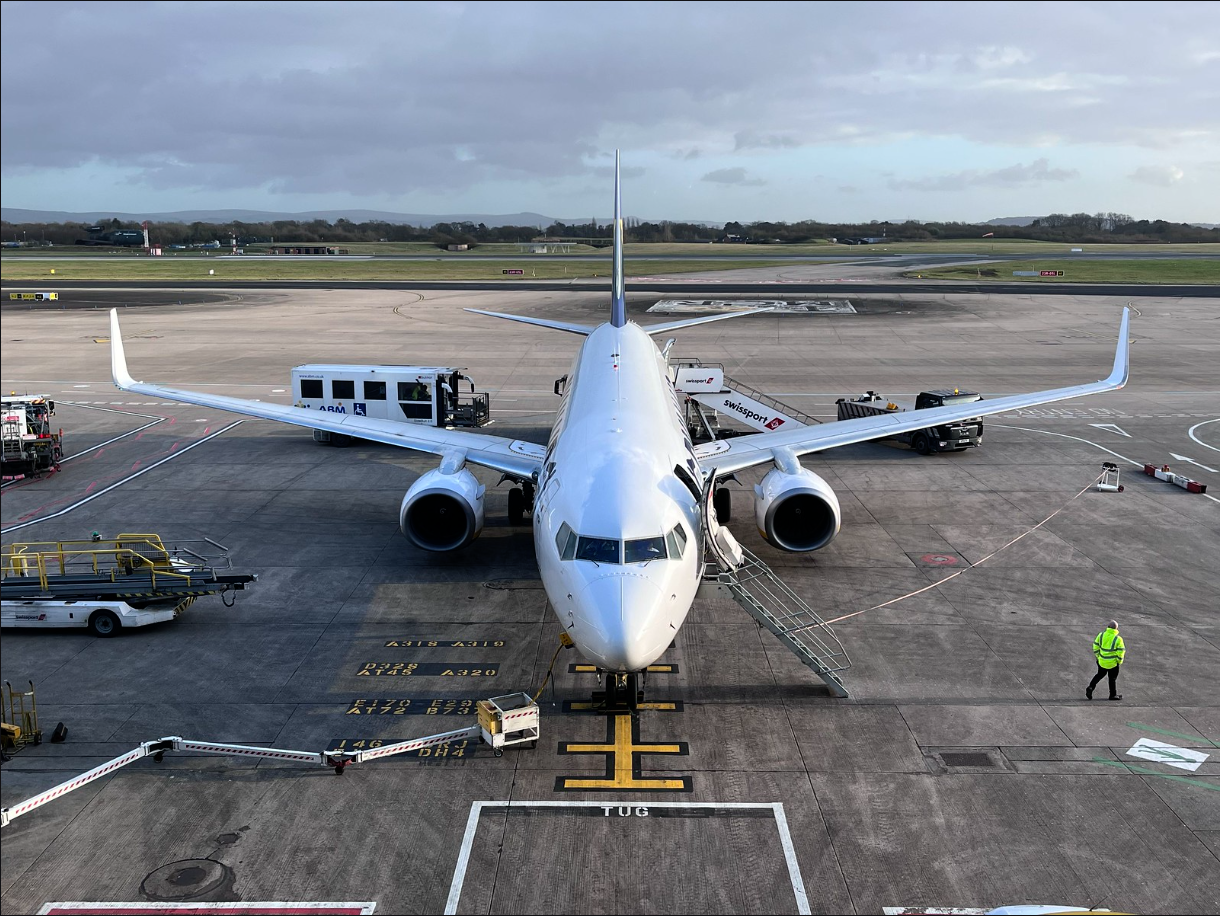
Football team charters utilise standard passenger aircraft where equipment travels in belly holds (baggage compartments beneath the passenger cabin), not dedicated cargo holds. This creates practical constraints that teams should understand when planning equipment manifests.
Belly hold limitations in typical charter aircraft restrict both volume and weight available for equipment. Regional turboprops and jets accommodate squad baggage similar to commercial operations—standard wheeled bags, equipment cases, and soft bags fit through baggage doors and position within compartments, whilst oversized items may require special handling or alternative storage solutions.
Baggage door dimensions on passenger aircraft typically measure 0.8-1.0 metres wide, requiring equipment to fit through these openings during loading. Most playing kit bags (60cm x 40cm x 30cm) and medical cases pass easily through standard baggage doors, but larger items like physiotherapy tables folded to 1 metre length may require assessment of specific aircraft baggage door configurations.
Weight capacity varies significantly with passenger counts—aircraft with full squad capacity (25-30 passengers) provide less baggage weight allowance than partially filled aircraft. Teams should provide accurate equipment manifests during charter booking, enabling coordinators to select aircraft with adequate capacity for both passengers and equipment volume.
Practical Equipment Packing Strategies
Systematic packing approaches maximise limited belly hold space whilst ensuring efficient loading and unloading at match venues.
Standardised equipment cases simplify coordination through consistent dimensions and identification. Many professional clubs use colour-coded or numbered bag systems—red bags for match kit, blue for training equipment, white for medical supplies—enabling ground crews to identify and load equipment categories systematically without opening individual cases.
Equipment distribution across bags should account for worst-case scenarios where individual bags delay or separate during handling. Critical items for match participation (complete match kit set, medical emergency equipment, goalkeeper specialist gear) should never concentrate in single bags. Distributing one complete playing kit across 2-3 bags ensures partial equipment arrival still enables squad participation.
Oversized item accommodation requires early planning when equipment includes physiotherapy treatment tables, portable goals, or specialised training apparatus exceeding standard baggage dimensions. Charter coordinators assess these items against specific aircraft configurations, determining whether items fit belly holds, require cabin storage (removing passenger seats), or necessitate larger aircraft selection.
Coordinating with Charter Operators on Equipment Manifests
Transparent communication about equipment requirements during booking prevents last-minute complications affecting aircraft suitability or loading timing.
Provide detailed equipment lists specifying item counts, dimensions of oversized equipment, and total estimated weight during initial charter inquiries. This information enables coordinators to recommend appropriate aircraft and identify any items requiring special handling arrangements.
Identify critical-path items that absolutely must arrive with squad for match participation—league-mandated medical equipment, complete match kit, goalkeeper gear. Charter coordinators prioritise loading these items with extra verification protocols, whilst secondary items (training balls, backup kit) receive standard handling.
Discuss cabin storage requirements early if equipment includes items unsuitable for belly holds. Some charters accommodate physiotherapy tables in passenger cabins by removing seats, but this reduces passenger capacity and requires advance planning during aircraft selection.
Our group charter coordination teams work with clubs to assess equipment manifests against available aircraft, identifying potential constraints before booking confirmation and recommending solutions that accommodate all essential equipment within charter configurations.
When Equipment Volume Determines Aircraft Selection
Certain situations justify selecting larger aircraft based primarily on equipment requirements rather than passenger count alone.
Tournament travel with extended stays (7-14 days) requires substantially more equipment than single-fixture trips. Additional training kit, expanded medical supplies, backup equipment, and operational items may double equipment volume compared to standard away fixtures, necessitating aircraft with greater baggage capacity.
International competition adding customs requirements and longer distances may justify consolidating equipment and squad on single charter rather than splitting across multiple vehicles or shipping equipment separately. This ensures equipment clears customs simultaneously with team arrival, avoiding delays that compromise preparation timing.
Multi-team coordination when clubs operate academy and first teams simultaneously may achieve efficiency through larger aircraft accommodating both squads and combined equipment manifests. However, coordinators should verify that equipment loading and unloading logistics don't create delays offsetting aircraft size advantages.
Baggage Load Distribution Principles
Whilst charter operators manage technical load planning, understanding basic distribution principles helps teams organise equipment systematically during ground handling.
Heavy items positioning matters for aircraft balance—medical equipment cases, filled water coolers, and dense equipment should distribute throughout baggage load rather than concentrate at one end. Charter operators and ground crews handle technical weight distribution, but teams can assist by identifying heavy items during manifest preparation.
Fragile equipment protection requires positioning away from heavy items that could shift during flight. Video analysis tablets, electronic devices, and medical instruments should indicate "fragile" labelling, enabling ground crews to position these items appropriately during loading sequences.
Loading sequence coordination should follow arrival unloading priorities—items needed first at destination (medical emergency kits, match kit for immediate pitch inspection) should load last onto aircraft, positioning for first-off unloading. Items needed later (training equipment, backup supplies) can load first, positioning deeper in belly holds.
Match-Day Timing and Coordination Framework
Effective equipment coordination extends beyond transport to encompass departure preparation, arrival timing, and venue access protocols that ensure match readiness.
Pre-Departure Equipment Organisation
Systematic pre-departure organisation prevents last-minute complications that delay departure or result in forgotten equipment.
Loading timeline should allocate 90 minutes before scheduled departure for complete equipment organisation. This provides time for systematic loading by category, manifest verification against checklist, and resolving any missing items before squad arrives.
Equipment sequence typically loads by category—playing kit first (furthest into cargo hold), followed by training equipment, medical supplies, and finally operational items near cargo door for easy access if needed during flight. This sequence mirrors unloading requirements at destination.
Final verification involves equipment managers checking each category against prepared manifest, confirming all essential items loaded, and photographing equipment arrangement for insurance documentation. Professional operations maintain departure checklists that equipment managers sign before departing departure point.
Arrival Coordination and Venue Access
Destination logistics determine whether equipment arrives with sufficient time for proper organisation before squad preparation begins.
Arrival timing should target 3-4 hours before kickoff for domestic fixtures, 4-5 hours for international matches requiring customs clearance and additional ground transport. This buffer accommodates unexpected delays whilst ensuring venue access during team preparation windows.
Ground crew coordination at arrival airport should provide immediate unloading support—delays waiting for ground crews to become available compress match preparation timing unnecessarily. Charter coordination includes arranging dedicated ground crews ready at arrival time.
Venue transport timing depends on distance from airport to stadium and local traffic patterns. Teams should account for 30-60 minutes ground transport under normal conditions, adding buffer for unfamiliar routes or event-day traffic near stadiums.
Equipment access at venues varies by stadium—some facilities provide direct equipment loading at player entrances, others require routing through separate goods entrances. Advance venue coordination confirms access protocols to avoid arrival complications.
Contingency Planning for Equipment Issues
Despite systematic planning, equipment issues occasionally occur requiring rapid response protocols.
Missing items discovered at departure require immediate decisions—delay departure to retrieve items (possible for non-essential equipment if delay remains under 30 minutes), source replacements at destination (works for generic items like water bottles or training cones), or proceed without items and adjust match-day operations (acceptable for non-critical training equipment but never for match kit or medical essentials).
Damaged equipment during transport typically affects items inadequately secured—physiotherapy tables shifting in cargo holds, electronic equipment impacted by heavy items, or kit bags opened during handling. Inspection upon arrival allows time for emergency replacements before match requirements.
Equipment delayed at destination through ground handling errors forces decisions about match participation—league regulations specify minimum equipment requirements (playing kit, medical supplies, match officials communication devices). Missing any regulatory requirement may force fixture postponement, whilst missing convenience items (training balls, extra kit) allows participation with adjustments.
Equipment Manifest Preparation Best Practices
Effective equipment coordination begins with detailed manifest preparation that informs charter planning, loading procedures, and arrival verification.
Creating Effective Equipment Manifests
Equipment manifests should provide charter coordinators with information needed for aircraft selection and load planning whilst serving as verification checklist for loading and unloading crews.
Manifest structure organises equipment by category (playing kit, medical, technical, training, operational) with item counts, dimensions, and weights. This categorisation enables cargo planners to position items appropriately within holds whilst helping unloading crews identify which items arrive first.
Essential item flagging highlights equipment critical for match participation—match kits, medical emergency supplies, match officials equipment. These items require verified loading and protective positioning to minimise loss or damage risk.
Dimension specifications for oversized items (physiotherapy tables, portable goals, large equipment cases) enable cargo planners to verify aircraft compatibility before departure. Including folded dimensions for collapsible items prevents assuming items fit based on operational dimensions.
Weight totals help charter coordinators verify total equipment weight remains within aircraft cargo capacity. Teams should sum category weights to confirm compliance—unexpected overages require equipment prioritisation decisions.
Sharing Manifests with Charter Coordinators
Manifest timing determines whether charter coordinators can incorporate equipment requirements into aircraft selection and loading planning.
48-hour advance notice represents minimum lead time for manifests—this allows coordinators to verify selected aircraft accommodates equipment requirements and communicate any limitations requiring adjustments. Last-minute manifest changes create complications if aircraft already confirmed lacks cargo space for newly added items.
Manifest updates occur when teams adjust equipment for specific fixtures—adding extra kit for tournaments, including specialised training equipment for extended trips, or bringing additional medical supplies for injury management situations. Any update changing cargo volume or weight by more than 10% requires advance notice to coordinators.
Special handling requests for fragile equipment, temperature-sensitive items, or equipment requiring immediate access during flight should appear prominently in manifests. These requests influence loading positions and may require coordination with flight crew for in-flight access.
Equipment Coordination Checklist
Pre-Departure (7 Days Before):
- Compile complete equipment manifest by category with dimensions and weights
- Share manifest with charter coordinators for aircraft compatibility verification
- Identify any oversized items requiring special cargo hold positioning
- Confirm destination ground crew availability for immediate unloading
- Verify venue equipment access protocols and timing requirements
Loading Day (Departure):
- Arrive at departure point 90 minutes before scheduled departure time
- Load equipment systematically by category following planned sequence
- Position heavy items (medical equipment, coolers) near cargo hold centre
- Place fragile items (video equipment, electronics) in protected positions
- Conduct final manifest verification confirming all items loaded
Arrival (Destination):
- Verify ground crew ready for immediate unloading upon arrival
- Supervise equipment unloading to ensure systematic removal by category
- Conduct manifest check confirming all items arrived intact
- Report any missing or damaged items immediately to charter coordinators
- Coordinate ground transport to venue following equipment verification
Frequently Asked Questions
What equipment categories require specific charter coordination for football teams?
Football team equipment falls into five categories requiring coordination: (1) Playing kit (match and training sets, goalkeeper equipment), (2) Medical supplies (physiotherapy tables, treatment equipment, emergency medical kits), (3) Technical equipment (video analysis devices, communication systems), (4) Training apparatus (balls, cones, resistance equipment), and (5) Operational items (water bottles, coolers, equipment cases). Each category has distinct size, weight, and handling requirements.
How do aircraft cargo hold configurations affect equipment loading for football teams?
Regional turboprop aircraft (ATR 42/72, Dash 8) provide cargo holds with 1.3-1.8m height clearance, accommodating folding physiotherapy tables and standard equipment cases. Small jets offer similar dimensions but faster loading through larger cargo doors. Load planning considers equipment distribution for aircraft balance—heavier items (medical equipment, water coolers) position near centre of gravity, lighter items (kit bags) toward extremities.
What timing framework works best for match-day equipment coordination?
Optimal match-day coordination follows this timeline: Equipment loads 90 minutes before departure (allows systematic organisation and final checks). Departure schedules for 3-4 hours before kickoff (provides arrival buffer, ground transport timing, and venue access). Equipment unloads immediately upon arrival with dedicated ground crew (15-20 minutes). This framework accommodates unexpected delays whilst ensuring match readiness.
Which equipment items commonly cause loading complications for football team charters?
Three items frequently create challenges: (1) Physiotherapy treatment tables—folding models (15-20kg, 2m length when folded) require careful positioning in cargo holds with height restrictions. (2) Water coolers and hydration equipment—filled coolers exceed weight limits; teams should fill at destination. (3) Goalkeeper training equipment—oversized frames and portable goals may not fit standard cargo configurations without advance planning.
How should teams prepare equipment manifests for charter coordinators?
Effective equipment manifests list items by category with dimensions and weights: (1) Count all items (e.g., '25 kit bags, 45cm x 30cm x 25cm each'), (2) Identify oversized pieces requiring special handling (treatment tables, portable goals), (3) Note fragile items needing protective positioning (video equipment, medical devices), (4) Flag essential items that cannot travel separately from squad (match kits, medical emergency supplies). Share manifests 48 hours before departure for load planning.
Systematic Equipment Coordination for Match Readiness
Football team equipment coordination moves beyond simply transporting kit to systematic logistics management that ensures match readiness regardless of fixture location, timing, or transport complexity.
The goal isn't minimising equipment quantity—teams require comprehensive supplies for professional operations. The goal is organising equipment transport so everything arrives intact, accessible, and ready for immediate use when match preparation begins.
Focus coordination on three priorities: (1) Essential equipment identification—items critical for league compliance and match participation require protected positioning and verified loading. (2) Cargo hold optimisation—systematic loading by category with appropriate weight distribution maintains aircraft balance whilst simplifying destination unloading. (3) Timing frameworks—allocating sufficient time for loading, transport, and venue access prevents compressed match preparation that impacts performance.
Build equipment manifests that communicate requirements clearly to charter coordinators 48 hours before departure. This advance notice enables aircraft selection verification and load planning that accommodates all requirements without last-minute complications.
Professional football operations depend on dozens of coordinated systems functioning reliably across season schedules. Equipment logistics represents one system where systematic planning eliminates problems before they compromise match readiness.
If your football club requires equipment coordination support for away fixtures, tournament participation, or multi-match tours, our sports charter team specialises in systematic equipment logistics that ensure match readiness regardless of destination complexity.
Get in touch with any questions about your air charter needs