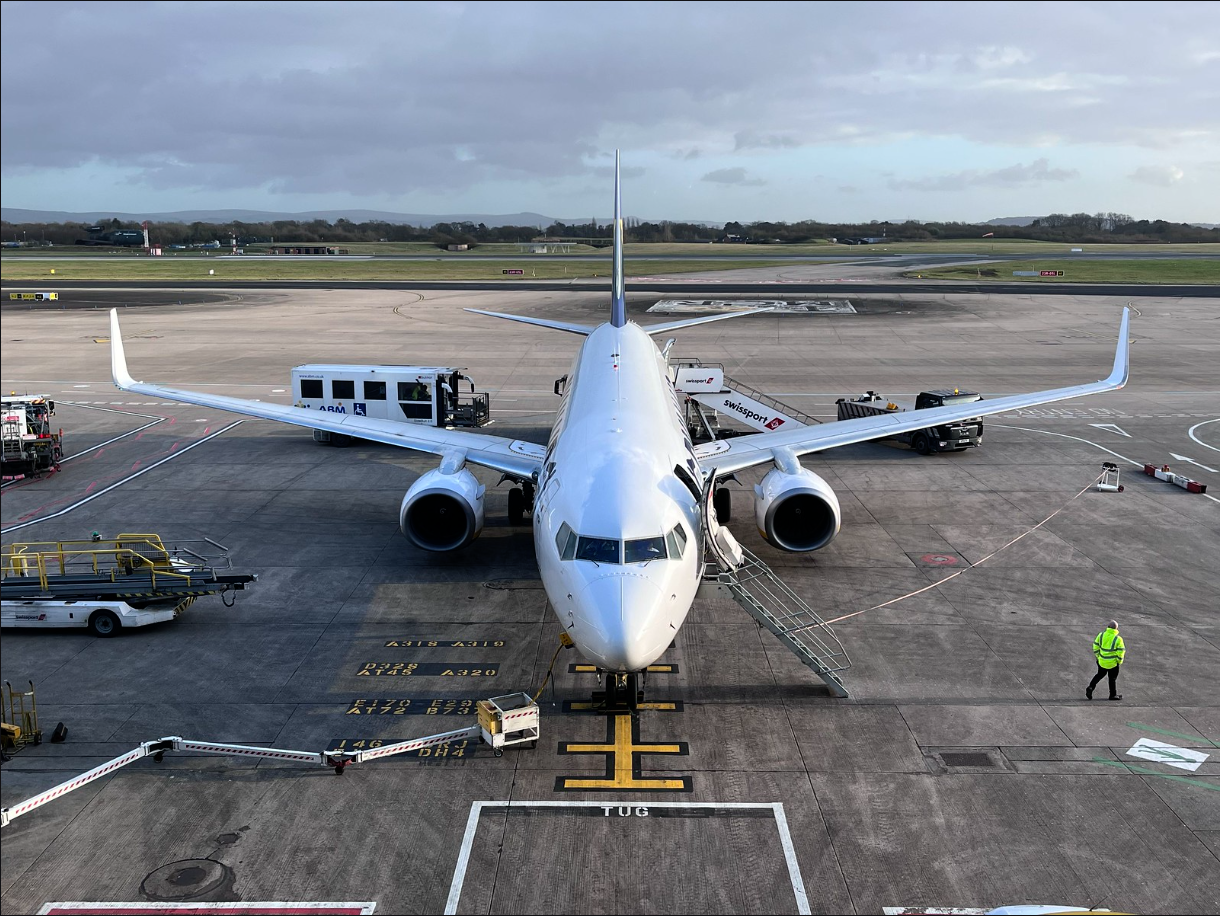
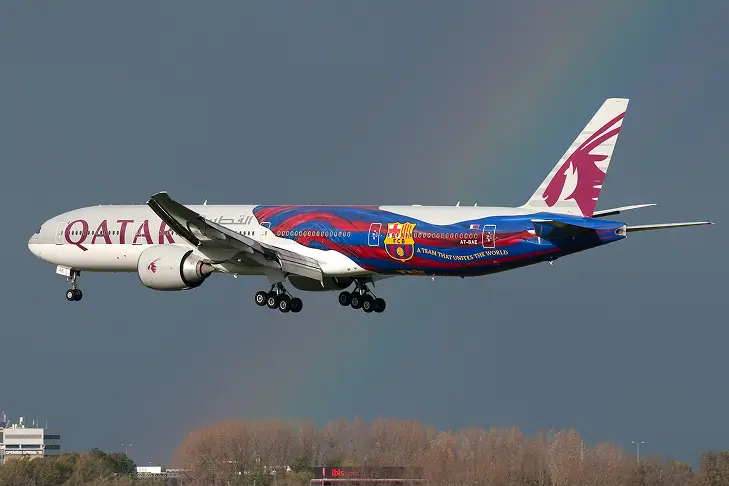
Multi-city charter coordination solves World Cup 2026's unique logistical challenge: 104 football matches spread across 16 stadiums in three countries, with distances exceeding 3,400 miles between venues. When your corporate hospitality group or fan association needs to follow matches across Los Angeles, Toronto, and Miami within days, commercial connections can't keep pace with tournament schedules.
In November 2025, we coordinated a 189-passenger charter from Curaçao to Kingston, Jamaica for the Blue Wave's historic World Cup 2026 qualification match. That experience - managing island departure logistics, tight match timing, and VIP coordination under tournament pressure - directly informs how we approach multi-city coordination for groups following teams through next summer's tournament.
The 2026 FIFA World Cup runs from 11 June to 19 July across the United States, Canada, and Mexico. Following the draw on 5 December, 48 teams will compete in 12 groups before progressing to knockout stages. The complete match schedule assigns specific fixtures to venues across four time zones, creating coordination requirements that scheduled aviation can't solve efficiently.
The Multi-City Coordination Challenge
The tournament's geography creates specific logistics hurdles. Vancouver to Miami measures 3,400 miles - the tournament's longest stadium distance. Multiple venue pairs exceed 2,000 miles. When your group needs to attend matches on consecutive days in different cities, commercial routing forces impossible choices: miss the match or risk delays that cascade through your itinerary.
ESPN's tournament analysis revealed that national teams face unprecedented travel requirements, with teams already using charter to manage circadian rhythm disruption from coast-to-coast movements. Industry observers have noted the significant coordination complexity for groups trying to follow teams across North America. Your corporate group or sports association faces the same challenge, but with tighter timelines and larger coordination requirements.
Regional Clusters and Multi-City Routing
Tournament geography divides into three regions that affect your coordination approach:
Western Region: Vancouver, Seattle, San Francisco Bay Area, Los Angeles create a manageable cluster for groups following matches within one geographic area. Regional flights between these cities range from 1-3 hours, allowing same-day positioning if your schedule permits.
Central Region: Kansas City, Dallas, Houston, plus Guadalajara and Monterrey in Mexico form the tournament's geographic heart. Groups following Central American or Latin American teams will likely spend significant time in this region, where distances between cities remain manageable (2-3 hour flights).
Eastern Region: New York/New Jersey, Philadelphia, Boston, Atlanta, and Miami host knockout rounds and the final on 19 July at MetLife Stadium. Groups planning corporate hospitality around semifinal and final matches will navigate this region's dense airport infrastructure and high demand during peak tournament periods.
The coordination challenge intensifies when your itinerary crosses regions. Los Angeles to Toronto on Monday for a match (2,174 miles), then Miami on Thursday for another (2,796 miles from Toronto), requires precise aircraft selection and ground coordination that commercial routing can't support reliably.
Match Venues and Charter Airport Access
Understanding which airports serve each stadium location affects aircraft selection and ground coordination timing. Private charter operations access executive airports closer to venues than commercial terminals, reducing ground transfer time significantly.
United States Venues
New York/New Jersey - MetLife Stadium (Final: 19 July)
- Primary charter airport: Teterboro Airport (TEB) - 12 miles from stadium
- Alternative: Morristown Municipal Airport (MMU) - 25 miles
- Commercial reference: Newark Liberty (EWR) - 10 miles
- Ground time: 20-35 minutes depending on traffic
Los Angeles - SoFi Stadium (Inglewood)
- Primary charter airport: Van Nuys Airport (VNY) - 18 miles from stadium
- Alternative: Hawthorne Municipal Airport (HHR) - 3 miles
- Alternative: Long Beach Airport (LGB) - 15 miles
- Commercial reference: LAX - 8 miles
- Ground time: 25-45 minutes depending on traffic
Dallas - AT&T Stadium (Arlington)
- Primary charter airport: Dallas Love Field (DAL) - 15 miles from stadium
- Alternative: Fort Worth Alliance Airport (AFW) - 15 miles
- Commercial reference: Dallas/Fort Worth International (DFW) - 18 miles
- Ground time: 20-30 minutes
Atlanta - Mercedes-Benz Stadium
- Primary charter airport: DeKalb-Peachtree Airport (PDK) - 12 miles from stadium
- Alternative: Fulton County Airport (FTY) - 10 miles
- Commercial reference: Hartsfield-Jackson Atlanta (ATL) - 10 miles
- Ground time: 15-25 minutes
Miami - Hard Rock Stadium (Miami Gardens)
- Primary charter airport: Miami-Opa Locka Executive Airport (OPF) - 8 miles from stadium
- Alternative: Fort Lauderdale Executive Airport (FXE) - 12 miles
- Commercial reference: Miami International (MIA) - 15 miles
- Ground time: 15-25 minutes
Houston - NRG Stadium
- Primary charter airport: Houston Hobby Airport (HOU) - 8 miles from stadium
- Alternative: Sugar Land Regional Airport (SGR) - 20 miles
- Commercial reference: George Bush Intercontinental (IAH) - 25 miles
- Ground time: 15-20 minutes
Seattle - Lumen Field
- Primary charter airport: Boeing Field/King County International (BFI) - 5 miles from stadium
- Commercial reference: Seattle-Tacoma International (SEA) - 13 miles
- Ground time: 10-20 minutes
San Francisco Bay Area - Levi's Stadium (Santa Clara)
- Primary charter airport: San Jose International Airport (SJC) - 3 miles from stadium
- Alternative: Palo Alto Airport (PAO) - 10 miles
- Alternative: Moffett Federal Airfield (NUQ) - 8 miles (subject to clearances)
- Commercial reference: San Francisco International (SFO) - 40 miles
- Ground time: 10-50 minutes depending on departure point
Philadelphia - Lincoln Financial Field
- Primary charter airport: Northeast Philadelphia Airport (PNE) - 8 miles from stadium
- Alternative: Trenton-Mercer Airport (TTN) - 30 miles
- Commercial reference: Philadelphia International (PHL) - 7 miles
- Ground time: 15-25 minutes
Kansas City - Arrowhead Stadium
- Primary charter airport: Charles B. Wheeler Downtown Airport (MKC) - 12 miles from stadium
- Commercial reference: Kansas City International (MCI) - 20 miles
- Ground time: 20-30 minutes
Boston - Gillette Stadium (Foxborough)
- Primary charter airport: Norwood Memorial Airport (OWD) - 12 miles from stadium
- Alternative: Hanscom Field (BED) - 35 miles
- Commercial reference: Boston Logan International (BOS) - 28 miles
- Ground time: 20-40 minutes
Canadian Venues
Toronto - BMO Field
- Primary charter airport: Billy Bishop Toronto City Airport (YTZ) - 3 miles from stadium
- Alternative: Buttonville Municipal Airport (YKZ) - 18 miles
- Commercial reference: Toronto Pearson International (YYZ) - 20 miles
- Ground time: 10-35 minutes
Vancouver - BC Place
- Primary charter airport: Vancouver International Airport South Terminal (YVR) - 8 miles from stadium
- Alternative: Boundary Bay Airport (YDT) - 18 miles
- Commercial reference: Vancouver International Main Terminal (YVR) - 9 miles
- Ground time: 15-25 minutes
Mexican Venues
Mexico City - Estadio Azteca (Opening Match: 11 June)
- Primary charter airport: Toluca International Airport (TLC) - 35 miles from stadium
- Commercial reference: Mexico City International (MEX) - 10 miles
- Ground time: 30-60 minutes depending on traffic
- Note: Mexico City altitude (7,350 feet) affects aircraft performance requirements
Guadalajara - Estadio Akron
- Primary charter airport: Guadalajara International Airport (GDL) - 20 miles from stadium
- Ground time: 25-35 minutes
Monterrey - Estadio BBVA
- Primary charter airport: Monterrey International Airport (MTY) - 12 miles from stadium
- Alternative: Del Norte International Airport (NTR) - 20 miles
- Ground time: 20-30 minutes
Airport Selection Considerations
FBO (Fixed Base Operator) Services: All listed charter airports provide executive terminal services, including dedicated customs and immigration facilities for international arrivals, crew lounges, and ground coordination support.
Aircraft Size Restrictions: Some executive airports have runway length limitations affecting which aircraft types can operate. Your charter operator confirms compatibility during planning.
Slot Availability: Major match days create demand spikes at charter airports near venues. Early booking (Q4 2024-Q1 2025) secures preferred departure slots.
Cross-Border Operations: US/Canada/Mexico routing requires operators with appropriate international clearances and customs pre-clearance capabilities where available.
Ground Transfer Coordination: Charter operators arrange dedicated ground transport from FBO to stadium, typically luxury coaches for larger groups or executive vehicles for smaller parties.
When Group Charter Makes Operational Sense
Charter coordination becomes operationally necessary when your group size, schedule flexibility, and multi-city requirements push beyond commercial aviation's capacity. The decision isn't about luxury - it's about logistics that work.
Group size threshold: For 20-50 passengers travelling together, group charter allows everyone to move as one unit rather than managing individual commercial bookings across multiple departure times. When your corporate hospitality package depends on clients arriving together, you can't accept the risk of staggered arrivals across three different connecting flights.
Timeline constraints: Back-to-back matches in different cities create timing requirements that commercial schedules can't accommodate. If your group attends a match in Dallas on Sunday evening and needs to be in Boston for Tuesday's match, charter provides the only reliable solution. Commercial routing adds connection time, airport delays, and overnight requirements that consume valuable tournament days.
Equipment and coordination needs: Fan groups travelling with banners, sports associations managing equipment, or corporate groups requiring specific ground transport coordination benefit from charter's integrated planning. Loading, unloading, and coordinating around match schedules becomes manageable when you control departure timing.
Aircraft Capacity Planning by Group Size
Selecting appropriate aircraft capacity prevents both wasted seats and split groups. Your group size determines aircraft type, which affects both coordination complexity and cost efficiency.
Small Corporate Groups (8-15 passengers): Embraer Legacy 600 or similar business jets handle transcontinental routes like Los Angeles to New York. These aircraft provide 13-16 passenger capacity, adequate baggage space for week-long trips, and access to executive airports near stadiums that larger aircraft can't reach. Flying Amsterdam to New York for European groups attending the final, this category provides non-stop service in approximately 8 hours.
Medium Groups (20-35 passengers): Regional jets like the Embraer E-Jets series or Boeing 737-700 accommodate this range whilst maintaining efficiency on routes like Toronto to Miami. These aircraft handle both transcontinental distances and have the flexibility to operate from main commercial airports or larger executive terminals, depending on routing requirements and ground coordination needs.
Large Groups (40-80+ passengers): Boeing 737 or Airbus A320 family aircraft serve large fan associations, corporate hospitality programmes, or sports delegations. Full charter of these aircraft makes economic sense when your group approaches 50+ passengers, as per-person costs become competitive with business class commercial fares whilst providing schedule control and coordination benefits.
Route-Specific Considerations
Aircraft selection must account for specific route characteristics beyond just passenger count:
- Vancouver to Miami (3,400 miles) requires long-range capability
- Regional movements like Dallas to Houston (240 miles) allow smaller, more economical aircraft
- Cross-border flights between US/Canada/Mexico require operators with appropriate international clearances
- Stadium proximity to suitable airports affects which aircraft types can access your destinations efficiently
Coordinated Scenarios for Multi-City Tournament Travel
Fliteline coordinates group charter for sports teams and fan associations attending major tournaments. These examples from recent qualification campaigns and past World Cups show how multi-city coordination works in practice.
Curaçao Blue Wave: World Cup 2026 Qualification
In November 2024, we coordinated charter for 189 Curaçao fans and VIPs travelling from Curaçao to Kingston, Jamaica for the final World Cup 2026 qualifier. Working with Corendon Airlines (team sponsor) and our partner Arajet, who operated a brand-new Boeing 737 Max 8 for the journey.
The result was historic: Curaçao's Blue Wave qualified for their first-ever FIFA World Cup after a 0-0 draw with Jamaica. The coordination challenge involved:
- Island departure logistics (limited airport infrastructure)
- 189 passengers requiring coordinated movement
- Match timing with same-day positioning requirements
- VIP and fan group coordination under single charter
- Partnership coordination between sponsor airline and operating carrier
When your group needs to be somewhere for moments that matter, timing and capacity coordination becomes everything. The fans could focus on the experience rather than travel logistics.
European Corporate Group: Russia 2018
A 45-person corporate hospitality group following England through the group stage required coordination across three Russian cities over 12 days. The routing challenge:
Cities: Volgograd → Nizhny Novgorod → Kaliningrad → return via Moscow
Distance: Over 2,800 miles total routing between venues
Timeline: 8 days between first and last group match, requiring overnight positioning twice
Coordinated an Airbus A319 charter (capacity 120 passengers, configured for 45 in comfort) that moved as the group's mobile base. Each positioning flight timed around match schedules, allowing clients 6-8 hours post-match before departure to next venue.
The alternative - commercial routing through Moscow hub for each leg - would have consumed two full days of the itinerary in connection time alone. Several clients told us afterwards they wouldn't have attended all three matches without charter coordination.
Brazilian Supporters: Germany 2006
For the 2006 World Cup, coordinating multiple positioning flights for a 60-person Brazilian supporters association following their national team through knockout rounds. The complexity came from venue uncertainty - you can't book specific routes until knockout pairings confirm 48-72 hours before matches.
Solution: Secured aircraft availability with flexible routing provisions. As Brazil progressed through rounds, we confirmed specific city pairs:
- Dortmund → Munich (group to knockout transition)
- Munich → Frankfurt (quarter-final positioning)
- Frankfurt → Dortmund (semi-final return)
The supporters could travel as a coordinated group with their banners, flags, and supporter materials, whilst maintaining flexibility for tournament progression. Without charter, the association would have needed to pre-book commercial flights before knowing venues, resulting in wasted tickets and split groups as knockout draws determined actual locations.
Planning Timeline and Booking Windows
Groups waiting until April 2026 face limited aircraft availability and premium pricing. Tournament planning requires 3-6 month lead times for multi-city coordination.
Q4 2024-Q1 2025 (Current Window): Optimal booking period. Aircraft availability remains wide, allowing precise aircraft matching to your group size and routing requirements. Operators can secure crew, plan positioning flights, and coordinate ground services well in advance.
Q2 2025: Good availability but narrowing options. Popular routes between major venues start filling. Groups should finalise itineraries and confirm bookings to secure preferred aircraft types.
Q3 2025-Q1 2026: Challenging booking environment. Prime routes show limited availability. Groups entering market face higher costs and may need to accept secondary aircraft choices or adjust routing plans.
April-June 2026: Critical shortage window. Most suitable aircraft committed to other groups. Emergency bookings face premium pricing (typically 40-60% above Q4 2024 rates) and limited routing flexibility.
Multi-City Coordination Checklist
When evaluating charter coordination for World Cup 2026, consider these operational factors:
Group composition: Confirm final headcount and any special requirements (wheelchair accessibility, medical needs, VIP requirements)
Match schedule: Map your group's fixture list with stadium locations and kickoff times
Timeline flexibility: Identify which matches are non-negotiable versus those with ±1 day flexibility
Routing optimisation: Evaluate if your match sequence allows regional clustering or requires transcontinental positioning
Equipment needs: Inventory supporter materials, corporate branding, or technical equipment requiring transport
Ground coordination: Assess hotel availability near stadiums and airport transfer requirements
Budget framework: Establish per-person cost ceiling and compare against business class commercial alternatives
Booking timeline: Start coordination discussions 6-9 months before tournament (ideally Q4 2024-Q1 2025)
Frequently Asked Questions
How far in advance should we book charter for World Cup 2026?
For multi-city tournament coordination, 6-9 months advance booking (Q4 2024-Q1 2025) provides optimal aircraft selection and cost efficiency. Groups booking in Q2 2025 still find good availability, but prime routes start narrowing. Waiting until Q1 2026 typically means limited options and 40-60% cost premiums.
What's the typical cost per person for tournament charter?
Per-person costs vary significantly based on group size, routing, and aircraft type. As a framework, 50-passenger groups on transcontinental routes typically see per-person costs approaching business class commercial fares whilst gaining schedule control and coordination benefits. Smaller groups (20-30 passengers) see higher per-person costs but gain operational advantages commercial routing can't provide.
Can we book charter without knowing exact knockout stage venues?
Yes. Effective coordination involves blocking aircraft availability with flexible routing provisions. Once your team's knockout stage venues are confirmed (typically 48-72 hours after group stage concludes), specific routing gets finalised. This approach requires working with operators experienced in tournament logistics who understand the need for rapid route confirmation.
What happens if our team exits the tournament earlier than planned?
Charter agreements typically include provisions for itinerary changes based on tournament progression. If your team exits early, you can often adjust the charter to conclude earlier (with cancellation terms applied to unused segments) or redirect to other tournament matches of interest. Flexibility provisions should be negotiated during initial booking.
How does customs and immigration work for multi-country routing?
Cross-border charter between US/Canada/Mexico requires operators with appropriate international clearances. Your charter operator coordinates customs and immigration procedures at each entry point, often using dedicated FBO (Fixed Base Operator) facilities that expedite processing for charter groups. Pre-clearance documentation streamlines the process significantly compared to commercial terminals.
Next Steps for World Cup 2026 Coordination
The tournament's multi-city geography creates coordination challenges that didn't exist in Qatar 2022. When your group needs to follow matches across 3,400 miles of North American venues, charter coordination removes the variables that commercial routing can't solve.
If you're evaluating charter options for World Cup 2026 group travel, Fliteline's passenger charter team coordinates multi-city sports travel with the same operational frameworks we apply to Champions League fixtures, Rugby World Cups, and F1 circuits. We'd be happy to discuss your tournament requirements and routing considerations.
The planning window is now. Groups establishing coordination frameworks in Q4 2024-Q1 2025 secure aircraft availability whilst maintaining routing flexibility as the tournament draw determines specific match schedules.
Get in touch with any questions about your air charter needs