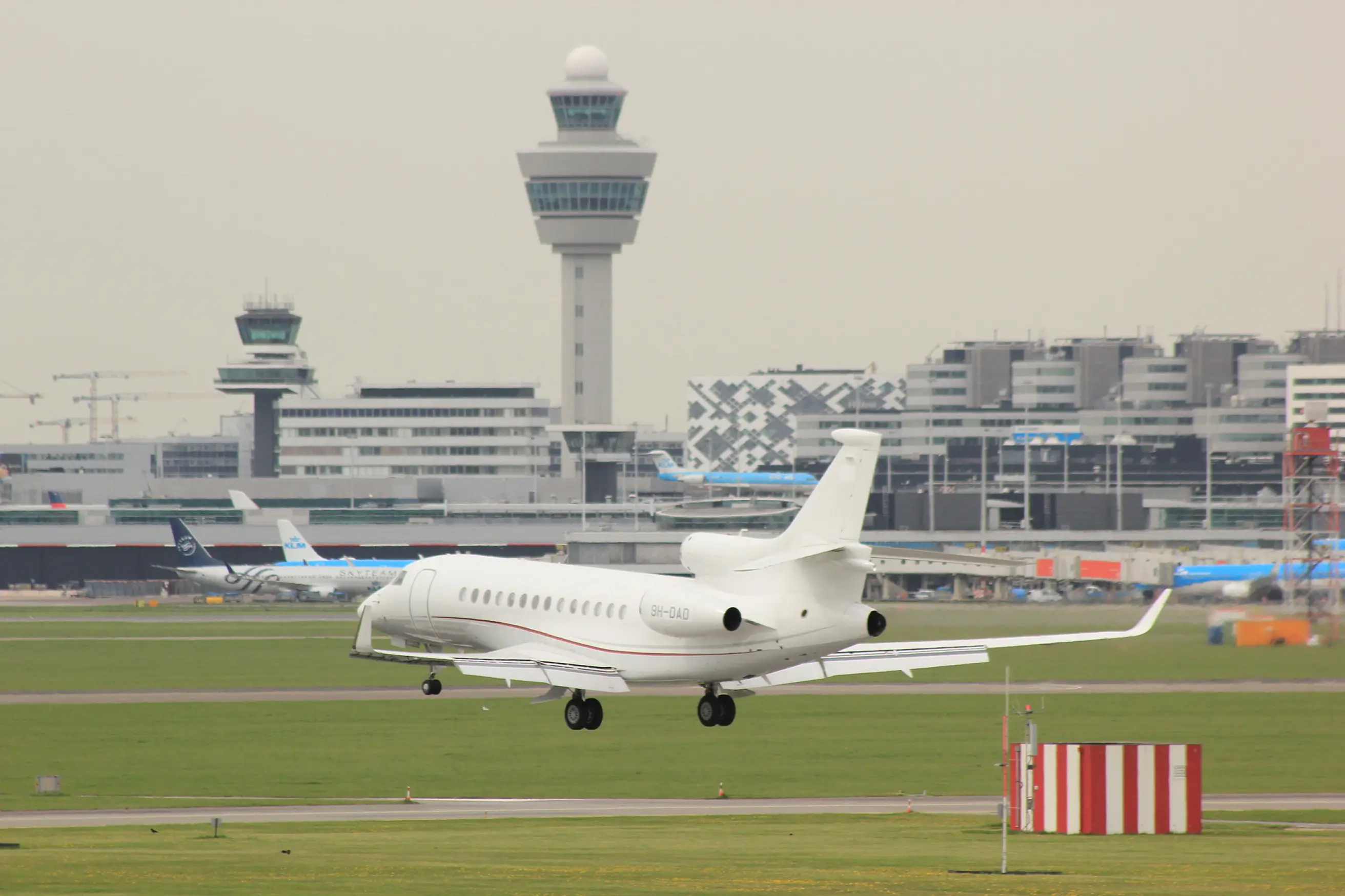
Private charter means securing a dedicated aircraft that operates entirely around your schedule, your routing, and your group. Unlike scheduled commercial services, you're not sharing the aircraft with other passengers, adapting to fixed departure times, or accepting the routing the airline finds convenient. This guide covers every planning consideration, whether you're evaluating private charter for executive travel, family journeys, corporate group travel, or specialist requirements.
When Does Private Charter Make Sense?
Private charter isn't the right choice for every journey. It makes sense when the value of schedule control, direct routing, or group cohesion outweighs the per-seat cost difference versus commercial options.
The most straightforward cases are time-critical business travel where missed connections or delayed departures carry real consequences, and group journeys where coordinating multiple passengers on commercial schedules creates logistical complexity and cost that often narrows the gap more than people expect.
Here's how the main options compare across the factors that matter most:
The decision framework — five questions worth asking:
- Does your schedule require departure flexibility that commercial timetables can't provide?
- Is your group of four or more travelling together on the same route?
- Does your destination have limited or no direct scheduled service?
- Do schedule changes within 24-48 hours of travel regularly affect your plans?
- Does the value of productivity time in transit justify the cost differential?
If you answer yes to two or more of these, charter is worth a proper cost comparison rather than an assumption — examining both the headline per-flight cost and the secondary factors like connection time eliminated and schedule flexibility maintained.
How Private Charter Coordination Works
The private jet booking process starts with your requirements and moves through aircraft sourcing, routing, permits, and final confirmation — typically within 24-72 hours for standard requirements, and faster for urgent situations.
Initial enquiry establishes operational parameters. You need to specify departure date and time, origin and destination airports, passenger count, any specific requirements (baggage volume, onboard catering, accessibility needs), and how much flexibility you have on timing and routing.
A private jet broker accesses a global network of operator relationships to source available aircraft matching your requirements. This network access matters because the best aircraft for your specific route and date often isn't available through any single operator — broker relationships span hundreds of operators across different aircraft types and regions.
The typical timeline from enquiry to confirmation:
- Hours 0-4: Enquiry, requirements confirmation, initial aircraft sourcing
- Hours 4-12: Aircraft options presented, routing confirmed, quote issued
- Hours 12-24: Aircraft confirmation, permit applications, catering and ground handling arranged
- Hours 24-48: Final manifest, handling confirmations, crew briefing
- Departure day: Dedicated check-in, FBO (Fixed-Base Operator) or private terminal facilities
For urgent requirements — same-day travel or last-minute schedule changes — this timeline compresses. Aircraft availability and positioning determine what's achievable, which is why established broker relationships matter for time-sensitive travel. Understanding private charter pricing and lead times helps set realistic expectations before you need to move quickly.
Choosing the Right Aircraft
Aircraft selection matches your passenger count, route range, baggage requirements, and runway access at your departure and destination airports. Getting this right at the enquiry stage avoids late changes that affect availability and cost.
Light jets like the Cessna Citation CJ series or Embraer Phenom 300 carry four to seven passengers on short to medium-range sectors. They access shorter runways at regional airports that larger jets can't use, which often matters for destinations in the Alps, Scottish Highlands, or southern European islands.
Midsize jets like the Hawker 850XP or Bombardier Challenger 350 offer more cabin space, greater range, and higher baggage capacity — typically six to nine passengers comfortably on sectors up to 4,000 nm. These are the workhorse aircraft for transatlantic business travel and longer European routes.
Large cabin jets like the Gulfstream G650 or Dassault Falcon 6X carry eight to fourteen passengers with intercontinental range. The Falcon 6X represents the current generation of wide-body business jets combining ultra-long range with a cabin width previously only available on converted airliners.
Aircraft selection checklist:
- Passenger count including any additional crew or assistants travelling
- Baggage volume (sports equipment, oversized items, or medical equipment affects aircraft choice)
- Route range required including any technical stop preferences
- Runway length available at destination airports
- Cabin height requirements for taller passengers or standing workspace
- Onboard connectivity requirements for working in transit
The aircraft category also affects airport access. Many regional airports serving major business destinations have runway length or weight restrictions that rule out larger jets entirely. Confirming airport suitability before finalising aircraft selection avoids late-stage complications.
Understanding Private Charter Costs
Private jet charter pricing reflects aircraft operating costs, crew, positioning, permits, and ground handling — not a fixed per-seat tariff. Understanding the components helps you evaluate quotes and identify where flexibility exists to manage costs.
Base aircraft costs vary significantly by category. Light jets typically run €2,400-€4,200 per flight hour. Midsize jets range from €4,800-€8,400 per flight hour. Large cabin jets run €9,600-€18,000+ per flight hour depending on type and configuration.
Your quote includes flight time for your routing plus any positioning legs required to bring the aircraft from its current location to your departure point. Return routing affects total cost — if you need the aircraft to wait at your destination or return empty, those hours are charged. Understanding this structure is the starting point for the business case for private charter, where productivity hours, eliminated connections, and schedule flexibility all feature in a complete comparison.
Factors that affect your quote:
- Lead time: Booking 5-7 days ahead improves aircraft availability and typically reduces cost
- Positioning distance: Aircraft closer to your departure reduces total charges
- Return routing: Round trips with the same aircraft often work out cheaper than two separate bookings
- Seasonal demand: Peak summer periods and major events tighten aircraft availability across Europe
- Airport fees: Major international airports charge higher landing and handling fees than regional alternatives
Empty leg flights offer cost reductions of 30-75% when your routing matches an aircraft repositioning after a previous charter. These work well for flexible travellers, but they carry availability uncertainty and aren't suitable for commitments where reliability matters above price. For private jet versus first class comparisons, the decision often comes down to group size, routing, and how frequently you travel rather than a single headline cost figure.
Special Considerations for Your Journey
Different travel scenarios introduce planning requirements worth addressing early rather than managing as last-minute complications.
Travelling with children changes aircraft selection criteria. Cabin height for children to move around, baggage volume for pushchairs and equipment, and flexible departure timing aligned with sleep schedules all affect which aircraft types work best. UK CAA and EASA regulations govern child restraint requirements — infants require approved child restraint systems rather than lap-holding on chartered aircraft, just as on commercial services. Early discussion of these requirements ensures the right aircraft and ground handling arrangements from the start.
Sports team and group travel benefits from charter's single manifest and coordinated check-in, but equipment volumes often drive aircraft selection as much as passenger count. Sports team charter flights require careful cargo hold assessments for kit bags, medical equipment, and media gear — undersizing the aircraft on equipment grounds is a common and avoidable error.
Regulatory factors affecting planning include France's private jet passenger tax, which adds a per-passenger levy on departures from French airports. Understanding France's private jet tax and factoring it into route planning matters for regular travellers to Paris, Nice, and other French destinations. Broader industry trends — including SAF (Sustainable Aviation Fuel) availability and evolving emissions reporting requirements — are increasingly relevant for organisations with environmental commitments.
FAQ: Private Charter Services
How far in advance do I need to book a private charter flight?
Standard bookings work best with 48-72 hours minimum notice, giving time to source aircraft, confirm routing, and arrange permits and handling. For complex international routing, peak-demand periods, or specific aircraft requirements, 5-7 days provides better availability and pricing. Same-day and next-day flights are achievable in many cases, particularly within Europe, though aircraft availability is naturally more limited at short notice.
What airports can private charter use that commercial flights can't?
Private charter can use any airport with appropriate runway length and facilities for the aircraft type. This includes regional airports like London Biggin Hill, Oxford, and Farnborough in the UK, and hundreds of smaller European airports with no scheduled airline service. Runway length is the main constraint — light jets can use 800-metre runways, while larger aircraft need 2,000+ metres. Confirming airport suitability for your aircraft is part of the booking process.
What's included in a charter quote?
Standard quotes include aircraft hire, crew, basic catering, and standard ground handling. Airport landing and handling fees, fuel surcharges, international overflight and landing permits, and premium catering are typically listed separately or confirmed during booking. Ask specifically about positioning costs, overnight crew fees for multi-day trips, and any applicable passenger taxes on your routing — France's jet tax being the most notable current example.
How does check-in work for private charter?
Private charter passengers use FBO (Fixed-Base Operator) or general aviation terminal facilities rather than commercial terminals. These offer dedicated check-in, private waiting areas, and direct airside access to the aircraft. Passengers typically arrive 20-30 minutes before departure rather than the 2+ hours required for commercial flights. Passport and identity checks still apply for international travel, but the process is considerably faster than commercial security screening.
Can I arrange private charter for a group of 30 or more passengers?
Yes — larger groups move into group charter territory, where aircraft selection shifts toward regional jets and narrowbody aircraft configured for group travel. Groups of 30-200 passengers have different coordination requirements around manifest management, equipment logistics, and multi-stakeholder sign-off. Our group charter coordination guide covers the planning process for larger parties in detail.
Planning Your Private Charter Journey
Private charter delivers most value when schedule control, direct routing, or group coordination genuinely matter to your travel requirements. The cost is real, but so is the calculation that shifts when you include connection time eliminated, regional airports accessed, and departure flexibility maintained for plans that change.
Understanding how private aviation is evolving — new aircraft types, expanding SAF availability, and changing regulatory environments — helps with longer-term travel planning and cost forecasting.
Working with experienced charter coordinators provides access to aircraft availability across a global operator network, regulatory knowledge managing international permits, and ground handling relationships that make the difference between a smooth departure and a last-minute complication. If you're evaluating private charter for a specific journey or want to understand whether it makes sense for your regular travel patterns, we're happy to work through the options with you. Get in touch with the Fliteline team via our private charter services page.
Get in touch with any questions about your air charter needs