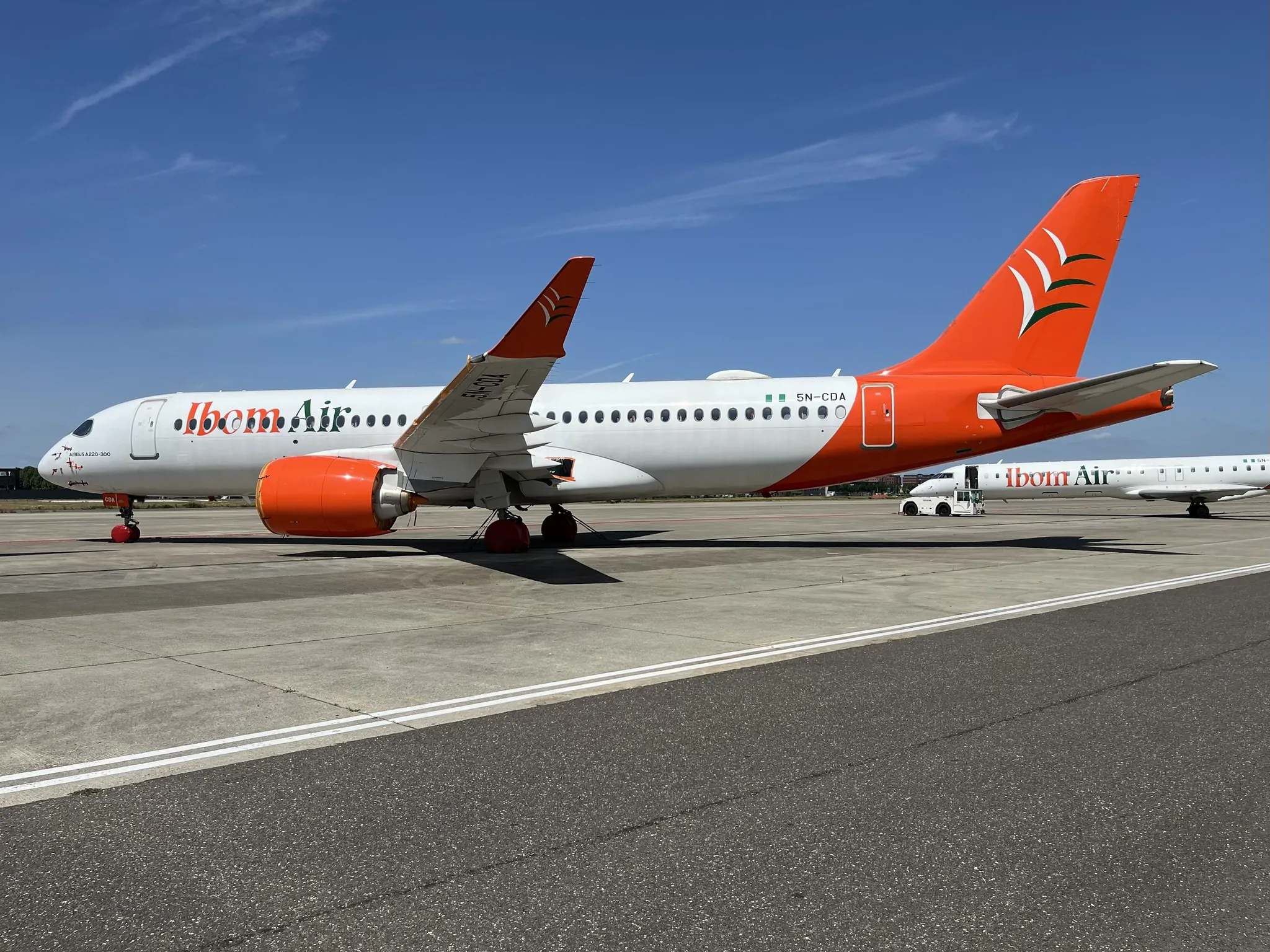
A few kilometres south of Toulouse's main airport, rows of airliners stand parked on the apron at Francazal with covers over their engines. When our colleague Eric visited last month, many of them were Airbus A220s in airBaltic and SWISS colours.
The A220 is one of the newest airliners flying, and some of the aircraft in Eric's photographs are less than ten years old. So why are they parked, and what happens to them now?
A modern aircraft with one engine option
The A220 started life as the Bombardier CSeries. SWISS was its launch operator and flew the first commercial service in 2016, before Airbus took over the programme and renamed it the A220 in 2018. It was designed to bring new-generation efficiency to routes too small for an A320.
There is one catch. Every A220 flies with the same engine, Pratt & Whitney's PW1500G geared turbofan. The larger A320neo can also be ordered with the CFM LEAP, so A220 operators had no alternative engine to fall back on when problems emerged, as Air Data News explains. Compare that with the A330, which we covered in October. Airlines could order it with three different engines.
What went wrong with the PW1500G
Engines started coming off the wing early because of premature wear on turbine parts. In 2023 Pratt & Whitney disclosed contamination in powdered-metal parts used across its geared turbofan family. That meant more than 1,200 engines could need inspection or overhaul between 2024 and 2026.
The bigger problem was the queue. A shop visit that once took around 60 days could stretch beyond 200, with spare engines scarce and maintenance shops already full, according to Gulf Times. airBaltic reported one engine spending 386 days in maintenance as early as 2023.
At the worst point in late 2025, about 17 per cent of the world's A220s were parked because of engine issues. Some operators had 30 to 40 per cent of their aircraft out of service at once.
SWISS: from grounding to a full exit
SWISS flies nine A220-100s and 21 of the larger A220-300s. In autumn 2025 it grounded the smaller -100s for an expected 18 months, so it could fit its available engines to the -300s. Within a year, that temporary measure had become permanent. Two of the -100s, HB-JBC and HB-JBD, are being taken apart at Francazal for engines and parts to support the -300 fleet, as Air Journal confirmed.
On 3 November 2026, SWISS went further. Presenting the airline's third-quarter results, chief financial officer Dennis Weber confirmed that SWISS will retire its entire A220 fleet, according to Air Data News. The last four -100s will leave at the start of the 2027/28 winter schedule, and the -300s will follow in the 2030s. SWISS plans to fly only the Airbus A320neo family on short-haul routes.
The decision is not a verdict on the aircraft itself. Weber has said the engine problems are not a safety issue, but they have been a constant drain on the airline's resources. Running two short-haul fleet types also means separate pilot training, spare parts and engineering qualifications. The A220 remains popular elsewhere in the Lufthansa Group, which has ordered 40 new A220-300s, mainly for Lufthansa City Airlines.
airBaltic: from expansion to a smaller fleet
airBaltic flies only the A220-300, and the engine problems hit it hard. In the first quarter of 2025, an average of 13 of its aircraft were grounded by engine issues. During the worst months, it leased in aircraft from other airlines to cover cancelled flights.
By the first quarter of 2026, no airBaltic aircraft were grounded for engine reasons. Even so, in August the airline announced it would cut its A220 fleet from 54 to about 36 by the end of 2026, as ch-aviation reported. It cited slower demand, higher costs linked to conflicts in Ukraine and the Middle East, and engine shortages. Part of its plan is to fly more ACMI work for other airlines, including a deal with the Lufthansa Group that runs to 2028.
EgyptAir: out within four years
EgyptAir took delivery of 12 A220-300s between 2020 and 2022. In February 2024 it sold all of them to the lessor Azorra, when the aircraft were only three to four years old. AeroMorning links the decision to PW1500G reliability, long maintenance times and parts shortages.
The sale was also part of a simpler fleet plan. EgyptAir already flies the A350, having taken the first of 16 A350-900s in February 2026. Its future fleet is built around the Boeing 737 MAX 8, the A320neo family, the Boeing 787 and the A350.
Azorra finished placing the A220s in June 2026. Some now fly with Breeze Airways and Cyprus Airways. About four were reportedly dismantled for parts from 2025.
Iraqi Airways: grounded and rarely flown
Iraqi Airways received five A220-300s. In May 2023, Iraq's civil aviation authority grounded the fleet after two aircraft suffered engine damage within days of each other, as FlightGlobal reported. The aircraft have seen very little use since.
What happens to a grounded young aircraft
These airlines show the three possible outcomes. An aircraft can wait in storage and return once engines are available. It can move to a new operator through a lessor. Or it can be taken apart, because during an engine shortage a working engine can be worth more to an airline than the airframe it hangs on.
The outlook is improving. Airbus says only 2 to 3 per cent of A220s are now parked for engine reasons, and it expects engine-related groundings to end before the end of 2026. Pratt & Whitney has expanded its maintenance capacity and introduced changes to shorten shop visits. For SWISS, though, the improvement has come too late to change its plans.
What this means when you need capacity
A grounded aircraft still leaves seats to fill. When a fleet type is out of action, airlines need replacement capacity quickly. Usually that means ACMI leasing, where another operator supplies the aircraft, crew, maintenance and insurance. airBaltic has used it in both directions, leasing aircraft in to cover groundings and now leasing its own aircraft out.
The lesson is the same one we took from the A330 and its engine options. We assess the individual aircraft and the support behind it, not just the type. Before we recommend an operator for ACMI leasing or passenger charter, we check how its fleet is maintained and whether spare engines are available.
Over to you
The A220's story raises a fair question for the industry. Should every new airliner come with a choice of engines? Tell us what you think on LinkedIn or Facebook.
Need capacity at short notice?
From our base at Schiphol, we source replacement aircraft for airlines and tour operators across Europe. If engine shortages or maintenance are leaving gaps in your schedule, request a quote and our team will talk you through the options.