Air cargo charter provides a direct solution when just-in-time (JIT) manufacturing logistics break down. If a critical component doesn't arrive on schedule and there's no buffer stock to fall back on, production stops. The cost of that stoppage almost always exceeds the cost of a charter flight. Understanding when to make that call, and how to make it quickly, is what separates logistics teams that manage supply chain disruption from those who are managed by it.
Why JIT manufacturing amplifies freight risk
JIT manufacturing works by eliminating inventory buffers. Components arrive as they're needed, which reduces storage costs and ties up less capital. It's an efficient model in stable conditions. But that efficiency comes with a structural vulnerability: there's no slack in the system when something goes wrong upstream.
A single delayed shipment can halt an entire production line. For automotive and aerospace manufacturers, line stoppages typically cost between €45,000 and €150,000 per hour depending on facility size and output value. At that rate, a two-day delay waiting for a replacement component on scheduled freight can cost more than a dedicated charter flight by a significant margin.
The tightest JIT operations also tend to use single-source suppliers for specialist components, which means there's no alternative supplier to call when a delivery fails. That concentration of risk makes fast freight solutions not just useful but operationally essential.
The four scenarios that trigger a charter call
Not every supply chain delay warrants charter. But there are four situations where it consistently makes financial and operational sense.
Single-source supplier failure. When the only supplier of a specialist component experiences production issues, equipment failure, or logistics problems, there's no backup option. Getting the part to your facility as fast as possible is the only lever available.
Geopolitical or route disruption. Red Sea diversions, port strikes, and airspace closures regularly push standard freight timelines by days or weeks. For manufacturers running tight schedules, that's enough to trigger a production halt. Charter allows you to route around disruption and maintain delivery windows that scheduled services can no longer guarantee.
Production ramp-up surges. When a customer increases an order at short notice, your inbound supply chain needs to accelerate to match. Scheduled freight capacity doesn't flex that quickly, particularly during peak periods. Dedicated charter capacity responds to your timeline rather than the airline's schedule.
Tooling and equipment failures. A broken press tool or failed production machine can stop output just as effectively as a missing component. If the replacement part or specialist engineer is abroad, getting them to your facility within hours rather than days is where charter earns its cost back quickly.
When to escalate to charter: a quick checklist
- Production stoppage is imminent or already underway
- Delay cost per day exceeds €20,000
- No scheduled freight option delivers within your window
- Cargo requires specialist handling beyond standard freight capability
- Single-source component with no alternative supplier available
How coordination works under time pressure
Speed of response depends on how quickly we can assess the requirement. The more information your team has ready at the point of contact, the faster we can move from enquiry to aircraft confirmation.
The key details we need immediately: collection location and availability window, exact cargo dimensions and weight, any hazardous classification, destination airport or facility, and your critical delivery deadline. With that information, we can typically have aircraft options in front of you within two to four hours and confirm a flight within eight.
The process mirrors what we describe in our AOG (Aircraft on Ground) charter checklist, which covers the same principle: the data you prepare before making contact directly determines how fast we can solve the problem.
We coordinate collection directly with your supplier where needed, handle export documentation and customs pre-clearance, and arrange ground handling at destination. For manufacturing cargo moving between European facilities, same-day or next-morning delivery is achievable in most cases. For intercontinental movements, 24-48 hours is a realistic target.
Matching aircraft to manufacturing cargo
Aircraft selection depends on what you're moving. Precision components, tooling parts, and small specialist items typically move on turboprop aircraft or light jets, which offer rapid availability and can access smaller regional airports closer to manufacturing sites.
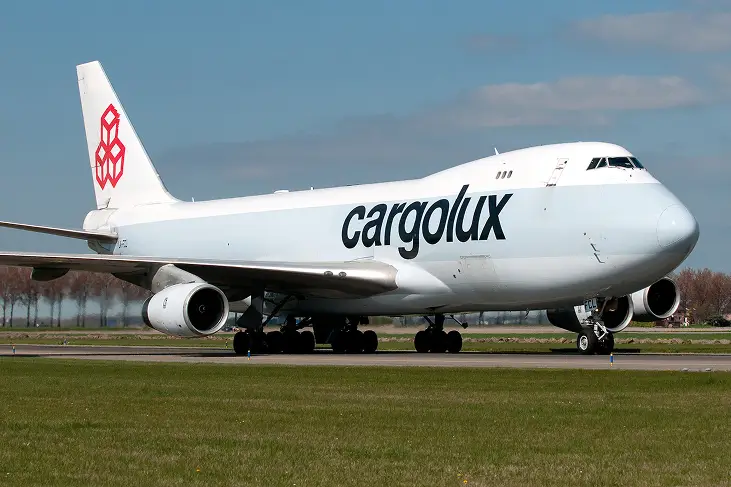
Mid-size freighters like the Boeing 737-400F handle palletised cargo, larger equipment assemblies, and shipments up to 20 tonnes. These are the workhorses of most manufacturing charter operations, balancing speed with meaningful payload capacity.
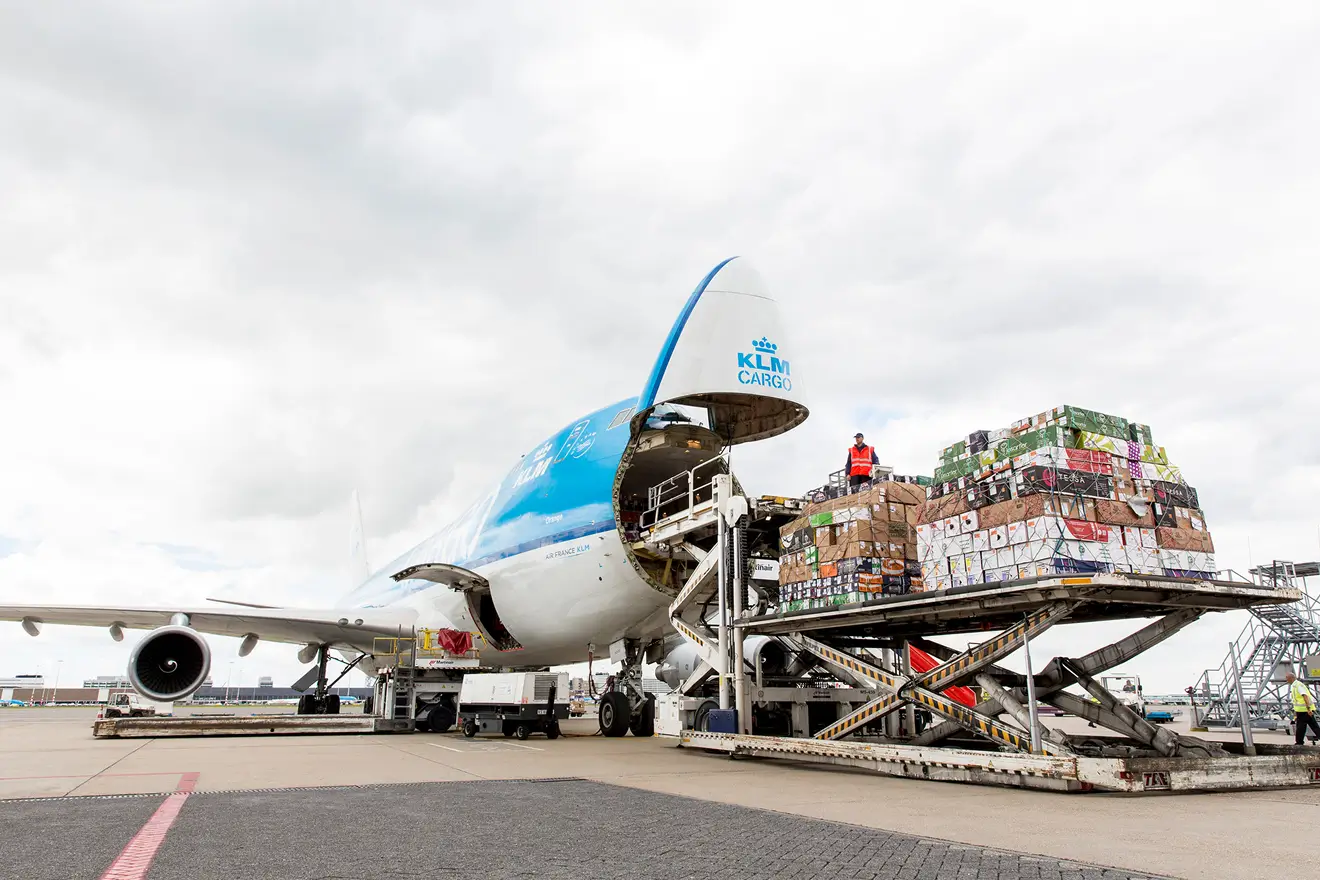
For oversized manufacturing equipment, production machinery, or aerospace components that won't fit in standard cargo holds, heavy lift aircraft like the Antonov An-124 provide the cargo hold dimensions and nose-loading capability to accommodate freight up to 20 metres long. Our guide to small cargo aircraft options covers the lighter end of the spectrum in more detail, which is often the right starting point for urgent precision parts.
For manufacturing sites in remote locations without paved runway access, rotorcraft provide an alternative worth considering. The post on when helicopters outperform fixed-wing aircraft covers the cargo missions where vertical takeoff changes the delivery equation.
Building charter into your supply chain resilience plan
Most manufacturers only think about cargo charter when a crisis is already underway. That's the most expensive time to start the conversation, because aircraft availability tightens, costs increase, and coordination happens under pressure.
A more practical approach is establishing a charter framework before you need it. This means identifying the three or four component categories that pose the highest risk to your production schedule, mapping the supplier locations and typical freight routes for those parts, and having a charter broker relationship in place so the escalation path is already agreed.
Our guide to optimising urgent air cargo workflows covers how logistics teams can build escalation protocols that reduce response time when disruption hits. The goal is to remove the decision-making friction that costs time when time is exactly what you don't have.
For manufacturers planning Q4 production schedules, our Q4 cargo charter planning guide covers how lead time and lane availability change during peak periods, and when to secure capacity in advance rather than competing for it reactively.
FAQ
How quickly can a cargo charter be arranged for a manufacturing emergency?
For urgent requirements within Europe, we can typically confirm aircraft availability within two to four hours of receiving full cargo specifications. Intercontinental movements take longer due to permit requirements, but 12-24 hours from enquiry to departure is achievable in most cases when cargo details are provided promptly.
What does it cost to charter a cargo aircraft for a manufacturing component?
Costs depend on aircraft type, routing, and timing. Turboprop aircraft for small urgent parts within Europe typically run €8,000-€15,000 per sector. Mid-size freighters for larger cargo range from €25,000-€60,000 depending on route and aircraft. When weighed against production stoppage costs of €45,000-€150,000 per hour, the calculation usually resolves quickly.
Can cargo charter handle hazardous or specialist manufacturing materials?
Yes. We coordinate dangerous goods shipments classified under IATA (International Air Transport Association) Dangerous Goods Regulations, including chemicals, industrial gases, and lithium batteries. Specialist handling requires early notification so we can confirm appropriate aircraft certification and ground handling capability at both ends.
What information do I need to have ready when I contact Fliteline?
The faster you can provide cargo dimensions, weight, collection location, destination, and your delivery deadline, the faster we can move. Hazardous classification, if applicable, and any temperature or handling requirements should be included. Having this information ready before you call typically cuts the time to aircraft confirmation by half.
If you're managing supply chain risk for a JIT operation and want to understand how charter fits into your contingency planning, we're happy to discuss your specific routes and components. Reach out via our cargo charter services page and we can explore what a practical escalation framework looks like for your situation.
Get in touch with any questions about your air charter needs